
Standard security measures are failing against digital-era car thieves; only a multi-layered tech defence can protect your high-end vehicle.
- Thieves are bypassing keyless entry with sophisticated « CAN injection » attacks, not just simple relay methods.
- Insurance-approved Thatcham S5 trackers and electronic Ghost Immobilisers form the new baseline for effective prevention and recovery.
Recommendation: Immediately audit your car’s security posture as you would your digital bank account—your insurance policy alone is no longer a safety net.
The feeling is a cold dread familiar to many high-end vehicle owners in the UK. You walk out to your driveway in the morning, coffee in hand, to find an empty space where your Range Rover, BMW, or Lexus used to be. There’s no broken glass, no sign of a struggle. Your keys are safe inside the house. Yet, the car is gone. This is the reality of modern vehicle crime, where thieves are no longer brutish opportunists but sophisticated tech operators. Your comprehensive insurance policy, once a comforting backstop, is now riddled with clauses and expectations you may not even be aware of.
The common advice—use a Faraday pouch, get a steering lock—is dangerously outdated. While these measures might deter an amateur, they are little more than a minor inconvenience for organised criminals armed with laptops and specialised hardware. They are exploiting vulnerabilities not just in your key fob’s signal, but in the very electronic nervous system of your car: the CAN bus network. The threat has evolved, and your defence strategy must evolve with it.
But what if the solution wasn’t a single product, but a strategic ecosystem of security? This guide moves beyond the platitudes. We will dissect the exact methods thieves use to steal your car in under a minute and lay out a robust, multi-layered defence plan. This isn’t just about buying gadgets; it’s about hardening your vehicle as a target, understanding your insurance obligations, and creating a digital fortress around your asset.
We will explore the crucial difference between preventative immobilisers and post-theft trackers, analyse how a simple mistake on a cold morning can void your insurance claim, and detail the critical « Golden Hour » protocol you must follow immediately after a theft. It’s time to treat your vehicle’s security with the same rigour as your online banking.
Summary: Understanding and Defeating Modern Vehicle Theft
- Why Thieves Can Steal Your Car in 60 Seconds Without the Key?
- How to Lower Your Premium with a Thatcham S5 Tracker?
- Ghost Immobiliser vs Steering Lock: Which Stops Modern Thieves?
- The « warming up » Mistake That Voids Theft Claims in Winter
- When to Report a Stolen Car to Ensure Tracker Activation?
- Why FaceID Is Safer Than a 4-Digit PIN for Banking Apps?
- How to Install a Ring Doorbell to Deter 80% of Opportunist Thieves?
- How to Ensure Your Mobile Banking App Is Safe from Hackers?
Why Thieves Can Steal Your Car in 60 Seconds Without the Key?
The idea that your car is safe because you have the key is a relic of the past. The dominant method for years has been the « relay attack, » where two thieves work together. One stands near your house with a device to capture and amplify your key fob’s signal, while the other stands by your car with a receiver that mimics the key. The car is tricked into thinking the key is present, allowing it to be unlocked and started. This entire process is silent, fast, and alarmingly effective, with relay devices available online for as little as £80-£100.
However, the threat landscape has escalated significantly. Security experts now warn of a far more invasive technique: the CAN (Controller Area Network) injection attack. Your modern vehicle is a network of small computers (ECUs) controlling everything from your lights to your engine. Thieves are now physically accessing this network, often by pulling back a front bumper to reach the headlight wiring, and injecting malicious commands directly into the CAN bus. This bypasses all key-related cryptography entirely.
Case Study: The Toyota RAV4 « Headlight Hack »
A chilling demonstration of this vulnerability was documented by security researcher Dr. Ken Tindell. Thieves targeted his Toyota RAV4 using a custom-built device, likely disguised as a Bluetooth speaker, which they connected to the headlight’s CAN bus wiring. By injecting specific digital messages, they were able to command the car to unlock its doors and authorise the engine to start, all without needing to relay or clone the key. This « headlight hacking » attack vector has since been identified on brands like Lexus, Nissan, and BMW, exposing a systemic weakness in modern vehicle architecture.
This evolution in tactics explains why so many high-end cars are disappearing without a trace. It’s no longer just about signal amplification; it’s about a direct, digital hot-wiring of the car’s core systems. The prevalence of these methods is staggering, with keyless or electronic compromise attacks now accounting for a huge portion of vehicle crime. Data shows that relay attacks now account for 70% of all stolen vehicles in the UK, and this number doesn’t even fully capture the rise of newer CAN injection methods. Your car isn’t just being tricked; it’s being hacked.
How to Lower Your Premium with a Thatcham S5 Tracker?
Given that determined thieves can potentially bypass preventative measures, the next layer of your security ecosystem is a robust post-theft recovery system. This is where insurance-approved trackers become non-negotiable, and the Thatcham Category S5 is the current gold standard. Unlike older systems, the S5 tracker includes Automatic Driver Recognition (ADR). You carry a small, separate tag; if the vehicle is moved without this tag present, an alert is instantly sent to a 24/7 monitoring centre, who then contact you to confirm a theft.
Insurers favour these systems for one simple reason: they work. The ability to track a stolen vehicle in real-time dramatically increases the odds of it being found, often within hours. This significantly reduces the insurer’s financial loss, a saving they are often willing to pass on to you. The difference in recovery outcomes is stark; recent data shows that vehicles equipped with an S5 security system have a 94% recovery rate, compared to less than 15% for vehicles without a tracker.
For owners of high-value, high-risk vehicles (like Range Rovers, which are a prime target), many insurers now mandate an S5 tracker as a condition of coverage. For others, it can unlock a premium discount of anywhere from 5% to 20%. However, you must be proactive. Before purchasing a system, call your insurer and ask specific questions to maximise your benefit. Don’t assume any tracker will qualify; the devil is in the detail of their policy.
The upfront cost of an S5 tracker and its annual subscription can seem steep, but when offset by the premium reduction and, more importantly, the near-certainty of recovering a £50,000+ asset, the return on investment is clear. It transforms a potential total loss into a recoverable incident.
Ghost Immobiliser vs Steering Lock: Which Stops Modern Thieves?
While a tracker is essential for recovery, the ideal scenario is to prevent the theft in the first place. This brings us to the frontline of your defence: immobilisation. Here, the battle is between old-school physical deterrents and new-school electronic countermeasures. The classic steering lock is a highly visible deterrent. Its presence signals to an opportunistic thief that your car is a less convenient target. However, against a professional equipped with an angle grinder, a steering wheel can be cut through in under 20 seconds. It’s a deterrent, not a definitive stop.
Enter the Ghost Immobiliser. This is a covert electronic device wired deep into your vehicle’s CAN bus network. It has no key fobs or LED indicators to give away its presence. To start the car, you must first enter a unique PIN code—a sequence of 4-20 presses—using existing buttons on your steering wheel, door panel, or dashboard. Without this code, the engine simply will not start. It directly counters both relay and CAN injection attacks because even if thieves unlock the doors and « authorise » the engine via hacking, the Ghost’s immobilisation command on the CAN bus prevents it from firing up.
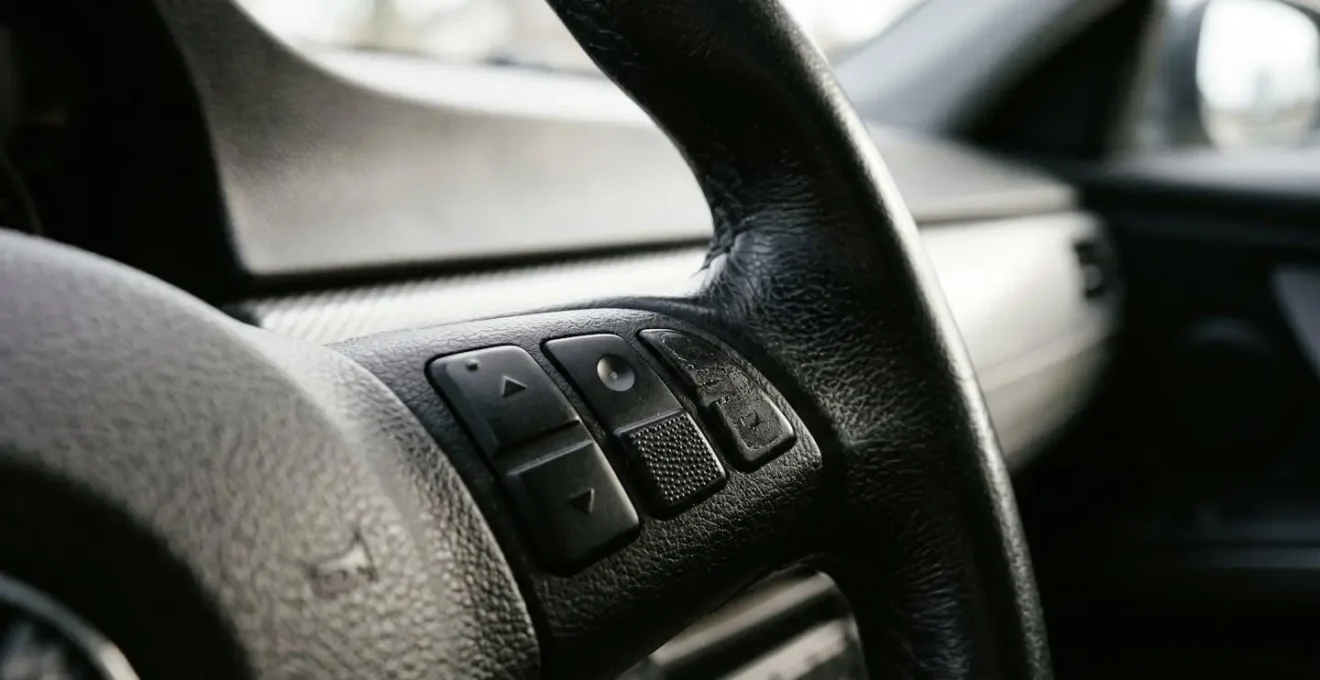
The key difference is who you are trying to stop. A steering lock is for the casual thief. A Ghost is for the professional. One common concern is whether such a modification will void your vehicle’s warranty. Reputable installers will guarantee their work, and as the device doesn’t alter the car’s standard ECU software, it is generally considered warranty-safe, though it’s always wise to check your manufacturer’s policy. The following table breaks down the core differences.
This comparative analysis from recent security assessments highlights the distinct roles these devices play in a layered defence.
| Security Factor | Ghost Immobiliser | Steering Lock |
|---|---|---|
| Effectiveness Against Tech-Savvy Thieves | Extremely high – prevents engine start even with cloned keys or relay attacks | Low – can be bypassed by cutting steering wheel in under 20 seconds |
| Visibility to Thieves | Completely invisible, hidden within vehicle wiring | Highly visible deterrent for opportunistic thieves |
| Daily Convenience | Requires PIN code entry every time (4-20 button sequence) | Physical hassle – must attach/remove manually each trip |
| Insurance Recognition | TASSA-approved but NOT Thatcham-approved (may not provide discount) | Often Thatcham-approved models available (qualifies for discount) |
| Cost | £400-£600+ with professional installation required | £50-£150, user-installable |
| Protection Type | Electronic immobilisation – defeats determined, tech-equipped thieves | Physical barrier – deters casual, opportunistic thieves |
The « warming up » Mistake That Voids Theft Claims in Winter
Even with the best security hardware, your own actions can be the weakest link in the chain—and insurers are watching closely. A common but perilous habit on frosty UK mornings is starting the car to warm it up and de-ice the windscreen while leaving it unattended on the driveway. This act, known as « frost-jacking, » is a gift to thieves. More critically, it will almost certainly void your insurance claim if the car is stolen.
Every comprehensive insurance policy contains a « reasonable care » clause. This clause requires you to take all reasonable steps to safeguard your property. Leaving a vehicle running with the keys in the ignition (or even with the key fob inside a running keyless car) is considered a definitive failure to take reasonable care. To an insurer, it’s the equivalent of leaving your front door wide open. When you file the claim, they will investigate the circumstances, and if it’s found the car was left running unattended, the claim will be denied, leaving you with a total financial loss.
This principle extends beyond just warming up the car. Your behaviour around key security is paramount. Storing your key fob in a bowl right by the front door, for example, makes it an easy target for a relay attack. While this might not automatically void a claim, it could complicate it. Proving you have taken preventative measures is becoming increasingly important. The onus is on you, the owner, to demonstrate you are not a negligent party. Following a strict protocol for vehicle and key security is no longer just good practice; it’s a financial necessity.
Your checklist for demonstrating ‘reasonable care’
- Never leave keys in the ignition or the key fob inside an unattended vehicle, even for a moment.
- Store key fobs in a signal-blocking Faraday pouch, especially overnight and away from doors/windows.
- Use a physical deterrent like a steering lock consistently to create a visual record of your security habits.
- Avoid warming up the car unattended; if you must, use a remote start system that keeps the doors locked and the car immobilised.
- Keep photographic evidence of your security measures and certificates for trackers or immobilisers to support any future claims.
When to Report a Stolen Car to Ensure Tracker Activation?
If the worst happens and your security layers are breached, the clock starts ticking. Your actions in the first 60 minutes—what we call the « Golden Hour »—are absolutely critical to the chances of recovery. Many people mistakenly believe they should wait 24 hours before reporting a vehicle as stolen, but this is a catastrophic error. Professional thieves work quickly to move the car to a shipping container, an underground car park, or a « chop shop » where it can be stripped for parts. Speed is your greatest weapon.
The moment you confirm your vehicle is stolen, your first call is not to your insurer or your tracker company. It is to the police. The tracker’s 24/7 monitoring centre cannot and will not activate live tracking without a valid Crime Reference Number (CRN) from the police. This is a non-negotiable step. Without a CRN, your expensive tracker is useless. Once you have the CRN, you immediately call the monitoring centre, provide the number, and they will activate the system and begin liaising directly with police forces nationwide.
This immediate, co-ordinated response is what leads to high recovery rates. The faster the report, the faster the activation, and the smaller the search area. Statistics on vehicle recovery consistently show the importance of rapid reporting. For instance, an analysis of theft data revealed that passenger vehicles had a 34% same-day recovery rate if the theft was reported promptly. Letting a day pass allows the trail to go cold and the chances of seeing your car again to plummet. Do not wait. The process is clear and must be executed with urgency.
The Golden Hour Protocol: Your 6-Step Action Plan
- Step 1 (0-5 mins): Confirm the theft. Quickly verify your car hasn’t been towed or moved by a family member.
- Step 2 (5-10 mins): Call the police on 101 (or 999 if the theft is in progress). State you need to report a vehicle theft and require a Crime Reference Number (CRN) for tracker activation.
- Step 3 (10-15 mins): Call your tracker’s monitoring company. Provide the CRN and ask them to activate live tracking immediately.
- Step 4 (15-20 mins): Inform the monitoring centre operator that you authorise them to liaise directly with the police for recovery.
- Step 5 (20-30 mins): Now, call your insurance company to open a claim, providing them with the CRN.
- Step 6 (30-60 mins): Follow up with the police and tracker company, providing any additional information they need.
Why FaceID Is Safer Than a 4-Digit PIN for Banking Apps?
The security principles that protect your finances are now directly applicable to protecting your vehicle. The title of this section may seem to be about banking, but the logic is identical for your car’s companion app (like BMW ConnectedDrive, MyT, or FordPass). These apps are powerful remote controls for your vehicle, offering features like remote unlock and start. If a thief gains access to your phone and this app, they have a digital key. This is why securing the app with the strongest possible authentication is no longer optional.
A simple 4-digit PIN is woefully insecure. It’s susceptible to « shoulder surfing » (someone watching you type it in) and brute-force attacks. There are only 10,000 possible combinations. Biometric authentication like FaceID or a fingerprint scan is exponentially more secure. The probability of a random person’s face unlocking your phone is estimated by Apple to be one in a million. It ties access to your unique biological identity, not a piece of information that can be stolen or guessed.

Treating your vehicle app with banking-level security means activating biometrics wherever possible. It creates a critical barrier. If your phone is stolen, the thief is locked out of the vehicle app, preventing them from using it to locate or unlock your car. You must also go beyond the app itself and secure the online account it connects to with a strong, unique password and two-factor authentication (2FA). This digital hygiene is a core part of a modern, layered security strategy.
Checklist: Banking-Level Security for Your Car App
- Immediately enable FaceID or fingerprint authentication for all vehicle manufacturer apps.
- Use a unique, complex password (12+ characters with symbols) for the associated online vehicle account.
- Activate two-factor authentication (2FA) on your vehicle account to stop credential-stuffing attacks.
- Keep the app updated to patch security vulnerabilities as soon as updates are released.
- If your phone is lost or stolen, your very first action should be to remotely log into your vehicle account from another device and change the password, revoking the stolen phone’s access.
How to Install a Ring Doorbell to Deter 80% of Opportunist Thieves?
Your security ecosystem shouldn’t stop at the car itself. Extending your surveillance perimeter to your driveway is a powerful layer of deterrence and evidence collection. Smart doorbells and home security cameras, like those from Ring or Nest, are often marketed as a deterrent against burglars, but their strategic placement is one of your best weapons against sophisticated car thieves. A visible camera makes your property a less attractive target, hardening it against attack.
However, the real value for a high-end car owner is not just deterrence; it’s evidence capture. Specifically, capturing irrefutable video proof of a relay or CAN injection attack. Why is this so critical? In the event of a theft with no signs of forced entry, an insurer might initially be skeptical. Video footage showing a thief holding a relay device near your front door or tampering with your front bumper provides undeniable proof of the method used. It counters any potential argument of « reasonable care » negligence on your part.
But simple installation is not enough. The placement and settings of your camera are paramount to ensure you capture the footage you need. The goal is to create a clear field of view that documents the entire criminal process, from the accomplice by your door to the thief by your car. This footage, stored securely in the cloud, becomes an invaluable asset for both the police investigation and your insurance claim.
Optimal Camera Placement for Capturing Theft Evidence
- Frame the Scene: Position the camera to see both your front door and your parked vehicle in a single, wide shot. This is essential to document the two-person relay attack.
- Angle for Detail: Angle the camera down at about 15-20 degrees. This helps capture faces and the devices they are carrying, rather than just the tops of their heads.
- Cover the Gap: Ensure the camera’s motion zone covers the path between your house and the car, as this is where the amplifying thief will operate.
- Maximise Sensitivity: Set motion detection alerts to high sensitivity and enable real-time notifications on your phone. An alert at 3 AM is your first warning.
- Use Cloud Storage: Always subscribe to the cloud storage plan. If thieves steal the camera itself, your evidence is safe and accessible.
Key Takeaways
- Modern theft is a tech crime; your defence must be a layered security ecosystem, not a single product.
- Combine pre-theft electronic immobilisation (Ghost) with post-theft, insurance-approved tracking (Thatcham S5).
- Your behaviour is part of your security. Uphold « reasonable care » and master the « Golden Hour » reporting protocol to protect your insurance claim.
How to Ensure Your Mobile Banking App Is Safe from Hackers?
The final layer of your vehicle’s security ecosystem brings us back to the banking analogy. Just as you protect your banking app, you must actively manage the digital hygiene of your car’s own onboard systems. Your car is no longer just a mechanical object; it’s a computer network on wheels, complete with software, connectivity, and vulnerabilities. Ensuring its digital safety requires applying the same principles of cybersecurity you would to any sensitive device.
The car’s infotainment system, which often connects to your phone via Bluetooth or to the internet via its own SIM card, is a potential attack vector. Likewise, the OBD-II diagnostic port, typically located under the dashboard, provides direct access to the vehicle’s CAN bus. It’s the port technicians use for diagnostics, but it’s also the port thieves can use for a CAN injection attack if they gain access to the cabin. Hardening these digital and physical access points is a crucial step.
This involves a proactive security posture. You should regularly check for and install software updates for your car’s infotainment system, just as you do for your phone. These updates often contain critical security patches. You must also be mindful of what you connect to your car, treating its Bluetooth and Wi-Fi capabilities with caution. Every connected device is a potential bridge for an attacker.
Digital Hygiene Checklist for Your Connected Vehicle
- Update Your Software: Check your manufacturer’s website or your car’s system menu quarterly for infotainment software updates and install them promptly.
- Use Strong Passwords: For any connected service accounts (navigation, in-car apps), use a unique, complex password. Never reuse passwords.
- Manage Connectivity: Disable Bluetooth and Wi-Fi in your car when you are not actively using them to reduce the available attack surface.
- Secure the Port: Consider purchasing an OBD-II port lock. This is a physical cap that blocks access to the diagnostic port, preventing thieves from easily plugging in their hacking devices.
- Prune Paired Devices: Regularly go into your car’s Bluetooth menu and delete old phones or temporary connections to keep the list of trusted devices clean.
Protecting your high-end vehicle in today’s threat landscape requires a paradigm shift. You must move from a passive reliance on insurance to an active, multi-layered security strategy that treats your car like the valuable, connected asset it is. By combining physical deterrents, covert electronic immobilisation, real-time tracking, and rigorous digital hygiene, you create an ecosystem of defence that makes your vehicle an unprofitable and difficult target for even the most sophisticated thieves. Your comprehensive policy is the last resort, not the first line of defence. To truly secure your investment and your peace of mind, the next step is to conduct a full audit of your current security posture and identify the gaps. Evaluate your vehicle’s vulnerabilities now and implement the advanced solutions required to close them.