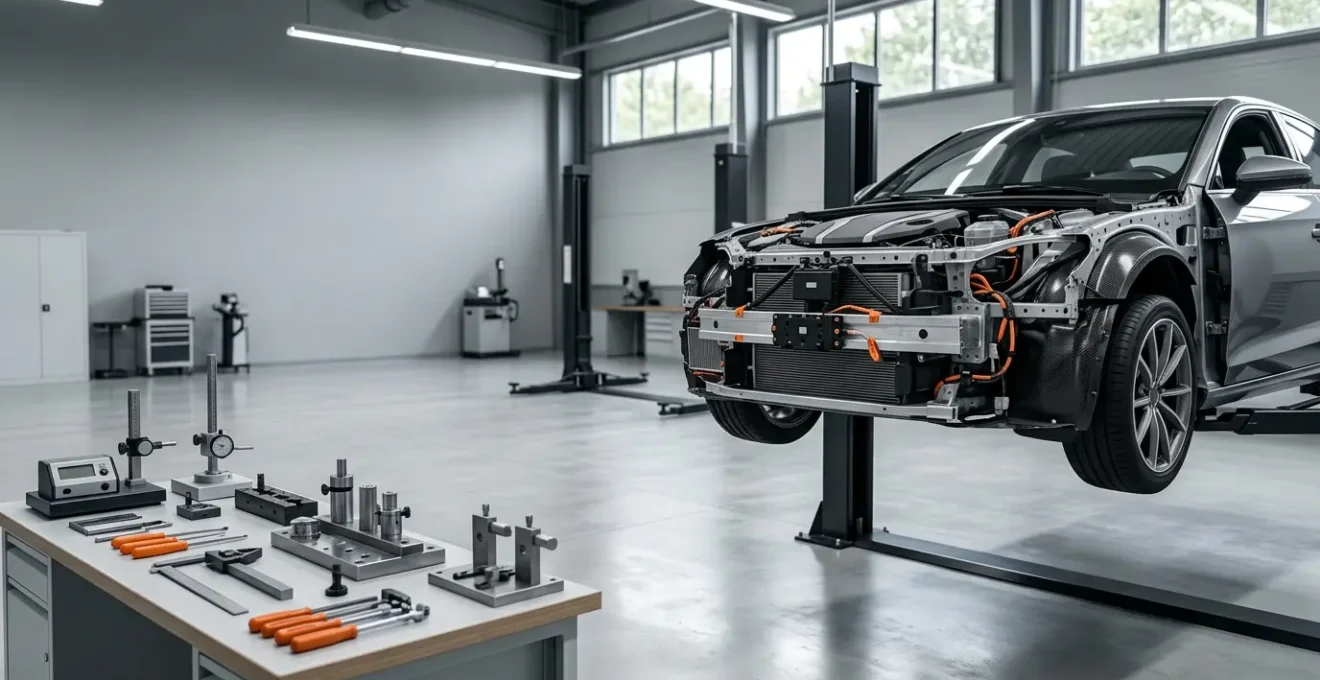
Your insurer’s preference for non-OEM parts is not a simple cost-saving measure; it’s a critical compromise on your vehicle’s integrated safety systems that can have catastrophic consequences.
- Using non-genuine parts can void your manufacturer’s warranty and lead to the failure of essential safety features like airbags and emergency braking.
- You have a legal right to choose a manufacturer-approved repairer, and you can successfully challenge an insurer who pressures you otherwise.
Recommendation: Never accept an insurer’s « approved repairer » without question. Demand OEM parts and a manufacturer-certified repair process to protect your safety, your warranty, and your vehicle’s value.
The call from your insurance company after an accident often feels like a relief. They have a network of « approved repairers » ready to get you back on the road quickly. It sounds efficient, simple, and reassuring. But beneath this surface of convenience lies a conflict of interest that places your safety directly at risk. The core of the issue is the aggressive push to use non-original equipment manufacturer (non-OEM) or aftermarket parts to cut costs, a practice that fundamentally misunderstands a modern vehicle is not a collection of interchangeable parts, but a single, integrated safety system.
This guide is not a simple comparison of part quality. It is an expert-backed playbook for you, the car owner, caught between an insurer’s balance sheet and your family’s safety. We will dismantle the arguments for non-OEM parts and arm you with the technical, legal, and financial knowledge to fight for the only acceptable standard of repair: one that uses genuine OEM parts and manufacturer-approved methods. The difference is not just cosmetic; it can be the difference between a minor incident and a life-altering tragedy. From sensor recalibration to the structural integrity of your vehicle’s chassis, every choice matters. It is time to assert your rights and demand the safety you paid for when you bought your car.
This article provides a comprehensive breakdown of the critical issues at stake. We will explore why modern vehicle systems demand precision, how you can legally reject your insurer’s preferred garage, and the hidden risks associated with seemingly minor damage. The following sections will equip you to navigate this complex process with confidence.
Summary: OEM vs Non-OEM Parts: A Guide to Safe Vehicle Repair
- Why Your Sensors Must Be Recalibrated After a Bumper Repair?
- How to Reject the Insurer’s « Approved Repairer » to Protect Your Warranty?
- BSI Kitemark vs Manufacturer Approved: Which Guarantee Matters?
- The Category S Write-Off Risk for Minor Structural Damage
- When to Inspect the Paintwork: Why You Should Never Collect at Night?
- Specialist EV Insurance vs Standard Policy: Which Covers Firmware Updates?
- Why Undervaluing Your Rebuild Cost Cuts Your Claim by 50%?
- Why Insuring an Electric Vehicle Costs More Than a Petrol Car?
Why Your Sensors Must Be Recalibrated After a Bumper Repair?
A modern car is a network of sophisticated sensors working in unison. The Advanced Driver-Assistance Systems (ADAS) that provide features like automatic emergency braking, lane-keeping assist, and blind-spot monitoring rely on cameras and radar sensors positioned with millimetric precision. A simple bumper repair, if done incorrectly, can knock this entire system out of alignment, with disastrous consequences. The systems may not show a fault light on the dashboard; they will simply fail to work when you need them most.
The suggestion that a non-specialist can simply « fit a new bumper » is dangerously outdated. These sensors are not plug-and-play. They require a controlled environment, specific manufacturer targets, and diagnostic equipment to perform a Static and/or Dynamic Calibration. This process tells the vehicle’s computer the exact position and viewing angle of the new sensor relative to the car’s centerline. Without this, the system is operating on false data. For example, research from the Insurance Institute for Highway Safety reveals that a minuscule 0.6-degree misalignment cuts automatic emergency braking reaction time in half. That is the difference between a safe stop and a serious collision.
Any repair involving the following components is a non-negotiable trigger for ADAS recalibration:
- Bumper replacements: This directly affects parking assist and blind-spot monitoring sensors.
- Rear radar sensors: Crucial for blind-spot and rear cross-traffic alerts, they demand precise alignment after any bumper work.
- Quarter panel repairs: These can misalign side-mounted radar for lane change assistance.
- Forward-facing cameras: Windshield replacement, suspension changes, or any front-end repair necessitates recalibration for lane keeping and collision warnings.
- Steering angle sensors: Must be reset after alignments, structural repairs, or airbag deployment to ensure the car knows which way it is pointing.
Insisting on a manufacturer-approved repairer ensures that the technicians have the correct training and equipment to perform these critical calibrations. It is a fundamental aspect of a safe repair that an insurer’s budget-focused network may not be equipped or willing to perform correctly.
How to Reject the Insurer’s « Approved Repairer » to Protect Your Warranty?
The single most powerful tool an insurer uses to control costs is directing you to their « approved repairer » network. They may imply that using another garage will delay your claim, cost you more, or even invalidate your insurance. This is a pressure tactic, and it is crucial to know that the law is on your side. You are not obligated to use their network, and doing so could jeopardise your vehicle’s warranty and safety.
Manufacturer-approved bodyshops are audited against the factory’s stringent standards. Their technicians are trained on the latest models, they have access to the correct repair procedures, and they are mandated to use genuine OEM parts. This is the only way to guarantee that your vehicle’s structural integrity, corrosion protection, and electronic systems warranties remain intact. As Compare the Market states, « Not only are you free to choose your own repairer, it’s your legal right to do so. » The Motor Vehicle Block Exemption Regulations provide a clear legal foundation for this choice.

When you are on the phone with a claims handler, they are following a script designed to steer you towards their preferred, cheaper option. You need your own script to counter this. The goal is to be firm, informed, and clear about your non-negotiable requirements for a safe and warrantied repair.
Your action plan: Asserting your right to choose
- State your legal position: Begin by firmly stating, « Under the Consumer Rights Act 2015 and the Motor Vehicle Block Exemption Regulations, I have the legal right to choose my own repairer. »
- Cite warranty protection: Immediately follow with, « I need to use a manufacturer-approved body shop to maintain my vehicle’s structural warranty and electronic systems warranty. »
- Challenge excess threats: If they threaten additional charges or a higher excess, you can state, « Any attempt to enforce an additional excess for exercising my legal right could be seen as an unfair trading practice. My choice is based on safety and warranty, not convenience. »
- Negotiate the delta: If they argue about cost, offer a compromise that protects your safety: « I am willing to let the insurer pay the amount quoted by your approved repairer. I will then cover the difference in cost to ensure OEM parts and manufacturer-approved procedures are used at my chosen bodyshop. »
- Demand written confirmation: Conclude every conversation with, « Please confirm in writing via email that my choice of a manufacturer-approved repairer will not negatively affect my claim settlement or policy terms. »
BSI Kitemark vs Manufacturer Approved: Which Guarantee Matters?
In the conversation about repair quality, you may hear the term « BSI Kitemark. » Insurers often present this as an equivalent to a manufacturer approval, but this is a dangerous oversimplification. Understanding the difference is key to not being misled. The BSI Kitemark (BS 10125:2022) is a certification for the repair process. It ensures a bodyshop has the correct equipment, technician skills, and quality control methods to perform a repair. As the BSI Group itself notes, the standard is about providing a framework for a safe and compliant repair.
However, the Kitemark certifies the process, not the parts. A Kitemark-certified bodyshop can still use non-OEM parts if the insurer instructs them to. This is the critical distinction. A Manufacturer Approval, on the other hand, certifies both the process AND mandates the use of genuine OEM parts. It is a holistic guarantee that the vehicle will be returned to its exact pre-accident factory specification, thus preserving all warranties.
The hierarchy of safety is clear, and the best way to understand it is to see how these certifications impact the final repair and your vehicle’s warranty. The following table, based on the principles outlined by bodies like the BSI Group, breaks down what each level of certification truly guarantees.
| Certification Level | What It Certifies | Warranty Coverage | Parts Specification | Your Safety Priority |
|---|---|---|---|---|
| Manufacturer-Approved Repairer + OEM Parts | Both the repair process AND the parts meet factory specifications | Full manufacturer structural, corrosion, and electronic warranty maintained | Genuine OEM parts mandated, exact factory specifications | ✓ Highest (Top of pyramid) |
| Independent Repairer + OEM Parts | Parts meet factory spec, but repair process not manufacturer-audited | Parts warranty maintained; process warranty depends on shop’s own guarantee | Genuine OEM parts used, verified by documentation | ✓ High (Middle of pyramid) |
| BSI Kitemark Certified Process + Non-OEM Parts | The repair process follows BS 10125:2022 standard | Process guaranteed by BSI for workmanship, but does NOT cover part quality or manufacturer warranty | Parts not specified by certification; may be aftermarket or non-genuine | ⚠ Medium (Process only) |
| Any Repairer + Non-Certified Non-OEM Parts | Neither process nor parts independently certified | No manufacturer warranty; shop’s own warranty only (often limited) | Uncertified aftermarket parts; quality and fit vary widely | ✗ Lowest (Base of pyramid) |
The takeaway is unambiguous: for maximum safety and guaranteed warranty protection, only the combination of a manufacturer-approved repairer using OEM parts is acceptable. The BSI Kitemark is a good standard, but it is not a substitute for the manufacturer’s own endorsement.
The Category S Write-Off Risk for Minor Structural Damage
A « Category S » (Structural) write-off classification can be devastating. It means the vehicle has sustained damage to its structural frame or chassis, and an insurer has deemed it uneconomical to repair. However, this « economic » decision is often based on the high cost of a correct repair using OEM parts and procedures. An insurer may push for a Cat S classification to avoid a costly but entirely feasible repair, leaving you with a fraction of your car’s value and no vehicle.
The danger of using non-OEM parts or non-approved repair methods on structural components cannot be overstated. A vehicle’s structure is a complex crumple zone, designed to absorb and channel crash energy away from the occupants. Using aftermarket parts that have not been crash-tested as part of the whole vehicle system, or using incorrect methods like bonding instead of welding, can cause this safety cage to fail catastrophically in a subsequent impact.
Case Study: The Honda Fit Crash Test and the Deadly Cost of Improper Repairs
A landmark series of tests demonstrated the horrific consequences of non-OEM repairs. Following a lawsuit where a couple was severely injured in a 2010 Honda Fit with an improperly repaired roof, vehicle safety advocates conducted scientific crash tests. According to the report on these tests, a vehicle repaired with aftermarket parts performed dramatically worse than an identical vehicle in original OEM condition. The aftermarket parts altered how crash energy was managed, causing the occupant compartment to collapse and safety systems like airbags to fail. In the test, the occupants of the OEM vehicle would have walked away with minor injuries, while those in the non-OEM repaired vehicle would have suffered fatal or life-changing injuries.
If you are facing a Cat S classification for what seems like manageable damage, you must challenge the decision immediately. The insurer’s calculation is financial, not necessarily technical. Here are the steps to fight back:
- Obtain a manufacturer-approved estimate: Get a detailed quote from a certified bodyshop that specifies OEM parts and factory methods.
- Hire an independent automotive engineer: A professional report assessing the safety and viability of an OEM repair can powerfully counter the insurer’s decision.
- Calculate the economic viability threshold: A vehicle is typically only written off if repair costs exceed 50-60% of its pre-accident value. Show that a correct repair falls below this threshold.
- Document your vehicle’s pre-accident condition: Use service records and MOT history to establish a high pre-accident value, making the repair more economically viable.
- Invoke your policy rights: Formally demand a review by a senior claims assessor.
- Escalate to the Financial Ombudsman: If the insurer refuses a reasonable and safe repair option, file a formal complaint.
When to Inspect the Paintwork: Why You Should Never Collect at Night?
After the stress of a repair, the moment you collect your car is a significant one. The bodyshop may be keen to get you through the handover process quickly, especially at the end of the day. However, this is the most critical moment for quality control, and one rule is absolute: never inspect and collect your vehicle at night or in poor light.
A professional paint job is about more than just matching the colour. It is about surface preparation, application consistency, and finishing quality. In the dim light of a workshop, under artificial yellow sodium lamps, or at dusk, a fresh coat of glossy paint can hide a multitude of sins. Your eyes will be drawn to the shine, but the defects will only become apparent in the clear, bright light of day.
Inspecting the vehicle outside in natural, indirect sunlight is the only way to perform a thorough check. What you are looking for are the subtle imperfections that betray a rushed or substandard repair. These include:
- Colour Mismatch: The repaired panel may look like a perfect match under artificial light but show a different shade or flop (how metallic flakes catch the light) outdoors. Walk around the car and look at it from different angles.
- Poor Surface Finish: Raking light across the surface will reveal « orange peel » (a bumpy texture like the skin of an orange), dust nibs trapped in the clear coat, or sanding marks that were not properly polished out.
- Evidence of Filler: A slight ripple or wave in a panel, invisible in low light, can indicate where body filler was used. A high-quality repair should be undetectable by sight or touch.
- Overspray: Check adjacent panels, window seals, and trim for fine specks of paint, a sure sign of careless masking and preparation.
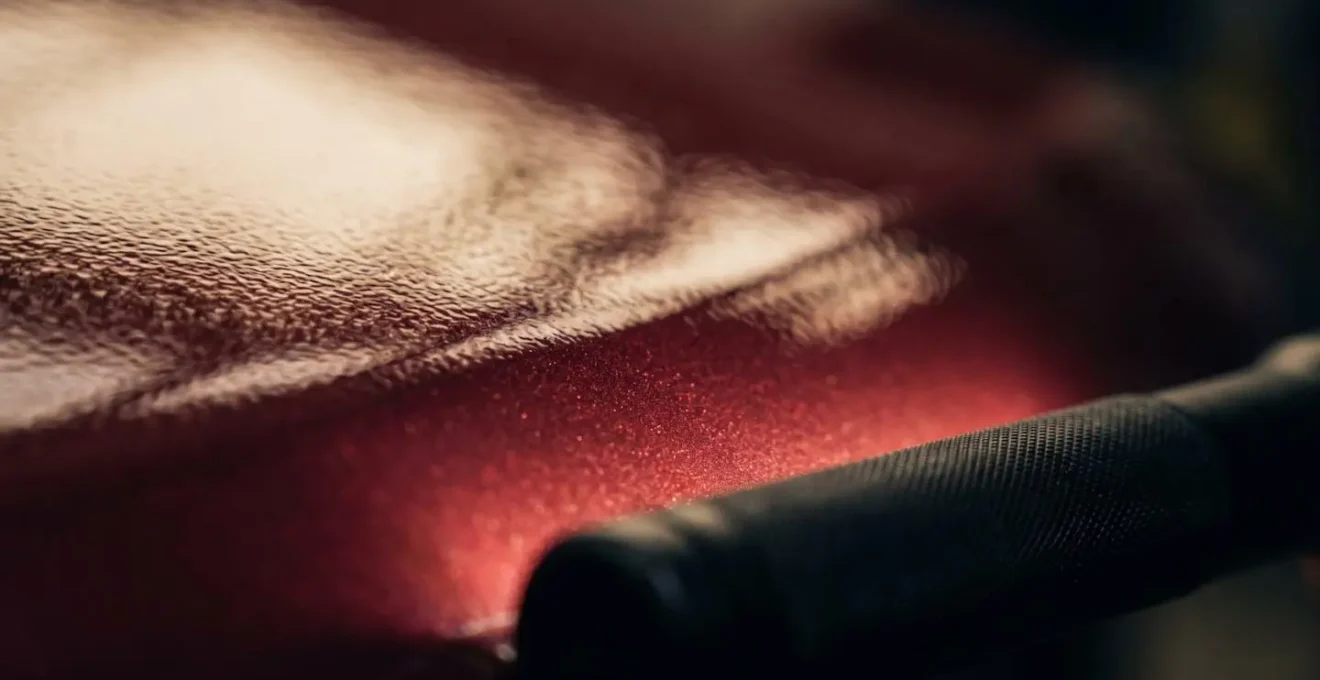
If a repairer insists you collect your vehicle in the evening, politely refuse and arrange to return the next day. A reputable bodyshop proud of its work will have no issue with this. An insistence on a nighttime handover should be considered a major red flag. Once you sign the collection note, you are accepting the quality of the repair, and it becomes much harder to have issues rectified later. Take your time, use the best light available—daylight—and do not sign anything until you are 100% satisfied.
Specialist EV Insurance vs Standard Policy: Which Covers Firmware Updates?
The rise of Electric Vehicles (EVs) introduces another layer of complexity to post-accident repairs. An EV is as much a sophisticated computer on wheels as it is a car. Its functionality is governed by firmware and software that manage everything from the battery to the infotainment system. A physical repair using non-OEM parts can have unforeseen and catastrophic digital consequences, which a standard car insurance policy is often ill-equipped to handle.
The scale of this issue is growing rapidly; according to S&P Global Mobility forecasts, over 132 million vehicles on European roads will have ADAS by the end of 2026. After a collision, an EV’s Battery Management System (BMS) requires a full diagnostic and recalibration—a software-driven process. If a non-OEM sensor is fitted, it can conflict with the vehicle’s next Over-The-Air (OTA) firmware update, potentially « bricking » entire systems and rendering the car inoperable. A standard policy may classify this as a « software issue » or « maintenance » and refuse to cover it, leaving you with an expensive paperweight.
Specialist EV insurance policies are designed to address these unique digital risks. They contain specific clauses that cover « firmware, » « software, » and « digital component integrity » following a repair. This is not a luxury; it’s a necessity. The table below highlights the critical coverage gaps between a standard policy and a specialist EV policy when it comes to the digital fallout from a physical repair.
| Coverage Area | Standard Auto Policy | Specialist EV Policy | Why It Matters for Repairs |
|---|---|---|---|
| Firmware/Software Damage | ❌ Not covered; classified as ‘intangible property’ | ✓ Explicitly covers firmware conflicts and OTA update failures post-repair | Non-OEM sensor can conflict with OTA updates, potentially ‘bricking’ vehicle systems |
| Battery Management System (BMS) Recalibration | ❌ Excluded; considered ‘maintenance’ not ‘repair’ | ✓ Covered as essential post-accident diagnostic procedure | After collision, BMS requires full diagnostic and recalibration (software-driven, not physical) |
| Digital Component Integrity Clause | ❌ Absent from policy language | ✓ Specific wording covering ‘firmware,’ ‘software,’ and ‘digital component integrity’ post-repair | Ensures coverage when electronic fallout from physical repair causes system failures |
| High-Voltage System Certification | ⚠ May cover labor but not specialist certification requirements | ✓ Mandates use of high-voltage certified technicians for battery/electrical repairs | Labor rates 30-50% higher due to technician scarcity; specialist policy covers premium |
| Structural Battery Pack Replacement | ⚠ Covered but often triggers total loss declaration due to cost | ✓ Higher claim limits acknowledging battery as structural component (£15,000-£25,000 typical) | In many EVs, battery is structural; minor side impact can damage casing, requiring 5-figure replacement |
Choosing a standard policy for an EV is a false economy. The risk of uncovered digital failures post-repair is simply too high. A specialist policy provides the peace of mind that both the physical and digital integrity of your vehicle will be restored correctly.
Why Undervaluing Your Rebuild Cost Cuts Your Claim by 50%?
A lesser-known but financially devastating aspect of insurance is the « Average Clause, » often hidden in the small print of your policy. This clause is designed to penalise policyholders who under-insure their property. In the context of vehicle insurance, this becomes critical when an insurer’s valuation of your vehicle’s pre-accident value is artificially low. If they value your car at £20,000 but its true market value is £25,000, you are technically 20% under-insured. The Average Clause allows them to reduce any claim payout by that same percentage. A £10,000 repair bill could see a £2,000 deduction simply because of their initial undervaluation.
This ties directly to the OEM vs. non-OEM debate. An insurer who mandates the use of cheaper, non-OEM parts is not only compromising safety but also causing « Repair-Related Diminished Value. » Your vehicle is now worth significantly less on the open market precisely because it has been repaired with inferior parts. This is a real, quantifiable financial loss that you are entitled to claim, but you must have the evidence to prove it. It’s a two-fold financial hit: a reduced claim payout and a lower vehicle resale value.
Fighting this requires a proactive, evidence-based approach. You cannot simply state your car is worth less; you must prove it. Here is the process for quantifying and claiming for diminished value caused by non-OEM repairs:
- Obtain a pre-accident valuation: Before repairs begin, commission an independent professional appraisal of your vehicle’s market value in its pre-accident state.
- Document every part used: Insist on a final, itemised repair invoice that lists every part with its part number, clearly identifying which are OEM and which are aftermarket.
- Get a post-repair independent appraisal: After the repair, have the same appraiser determine the new market value of the vehicle, creating a direct side-by-side comparison.
- Calculate Inherent Diminished Value (IDV): This documents the loss in value that occurs simply because the vehicle now has an accident history, even with a perfect OEM repair.
- Calculate Repair-Related Diminished Value (RRDV): This quantifies the additional loss specifically from the use of non-OEM parts.
- File a diminished value claim: Submit a formal claim to the at-fault party’s insurer (or your own, if they mandated the parts) with both appraisals and all documentation.
- Invoke the insurer’s duty: Remind your insurer of their duty to indemnify you—to return you to the financial position you were in before the loss. Using non-OEM parts and causing diminished value is a failure of this duty.
This is not a simple process, but it is the only way to be made financially whole after a non-OEM repair. It forces the insurer to confront the real-world financial consequences of their cost-cutting decisions.
Key takeaways
- Your vehicle is an integrated safety system; using non-OEM parts breaks this system and can cause critical features like airbags and emergency braking to fail.
- You have a legal right to choose a manufacturer-approved repairer. Do not let your insurer pressure you into using their « approved » network, which prioritises cost over safety.
- For a safe, warrantied repair that protects your vehicle’s value, demand two things: a manufacturer-approved bodyshop and the exclusive use of genuine OEM parts.
Why Insuring an Electric Vehicle Costs More Than a Petrol Car?
The higher insurance premiums for Electric Vehicles (EVs) are a source of frustration for many owners. The reason is not arbitrary; it is rooted in the fundamentally different and more complex nature of EV repair. Insurers base their prices on risk, and the data shows that repairing an EV after a collision is significantly more expensive and requires a higher level of specialisation than its petrol counterpart.
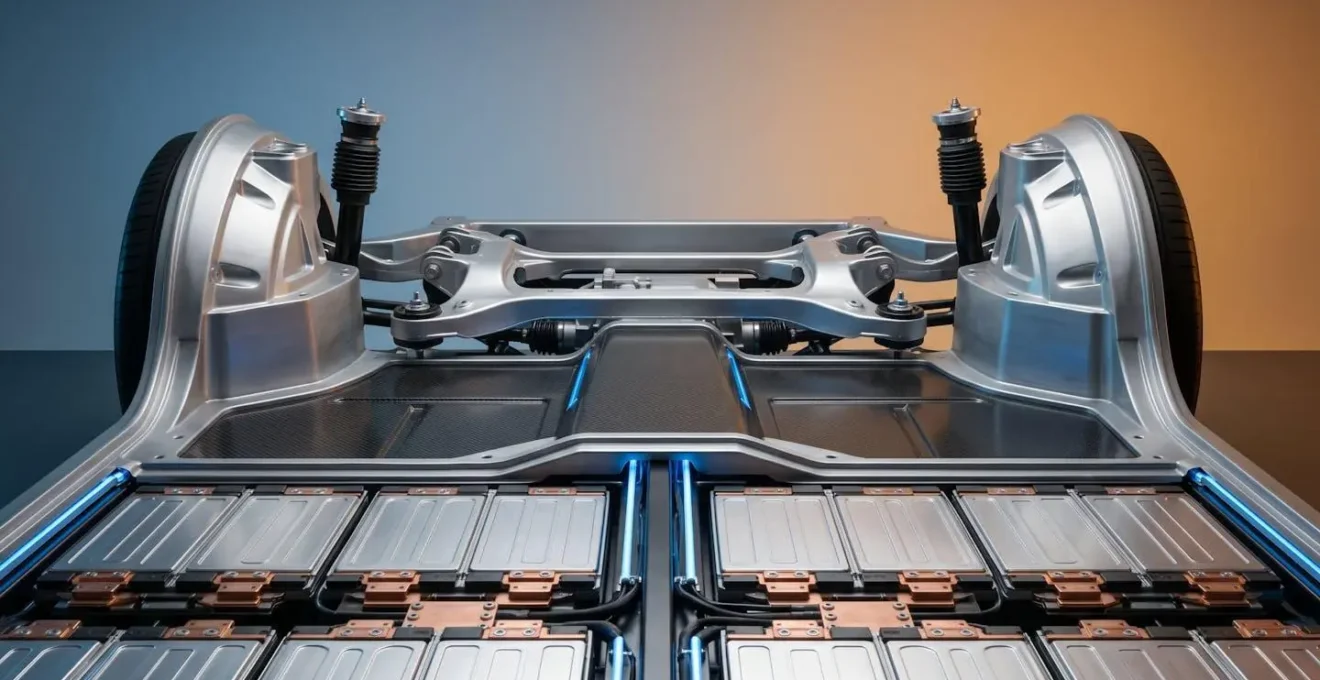
The primary cost driver is the battery. In many modern EVs, the battery pack is not just a power source; it is a structural component of the vehicle’s chassis. This « skateboard » design is efficient for manufacturing but creates a massive repair liability. A minor side impact that might be a simple door or sill repair on a petrol car can cause damage to the structural battery casing of an EV. This often mandates a full battery pack replacement, a job that can cost anywhere from £15,000 to over £25,000, and will almost certainly result in the vehicle being declared a total loss.
Case Study: The Reality of an EV Structural Battery Repair
Consider a typical side-impact scenario. On a petrol car, the repair might involve a new door skin, sill repair, and paint, costing around £1,500-£2,500. On a Tesla Model Y or similar EV with a structural battery, that same impact could crack the battery pack’s casing. Due to safety protocols and the integrated nature of the component, this is non-negotiable: the entire battery pack must be replaced. This single component’s cost alone can exceed the vehicle’s residual value, triggering a write-off for damage that would be considered minor on a conventional car. This outsized risk is a primary driver of higher EV premiums.
Beyond the battery, two other factors inflate repair costs. First, the EV parts market is dominated by OEMs. There is no robust aftermarket for complex components like drive units or battery management systems, giving manufacturers a monopoly on pricing. Second, there is a significant shortage of « high-voltage certified » technicians qualified to work safely on these vehicles. This scarcity of labour means bodyshop rates for EV repairs are often 30-50% higher than for petrol cars. Insurers factor this combination of high parts cost, extreme structural risk, and expensive specialised labour directly into your premium.
Armed with this knowledge, you are no longer just a claimant; you are an informed advocate for your own safety. The battle with your insurer is not about a few hundred pounds on a repair bill; it is about the fundamental integrity of the vehicle you and your family rely on. Do not compromise. Insist on a manufacturer-approved repair using 100% genuine OEM parts. It is your right, and it is the only way to guarantee a safe outcome.