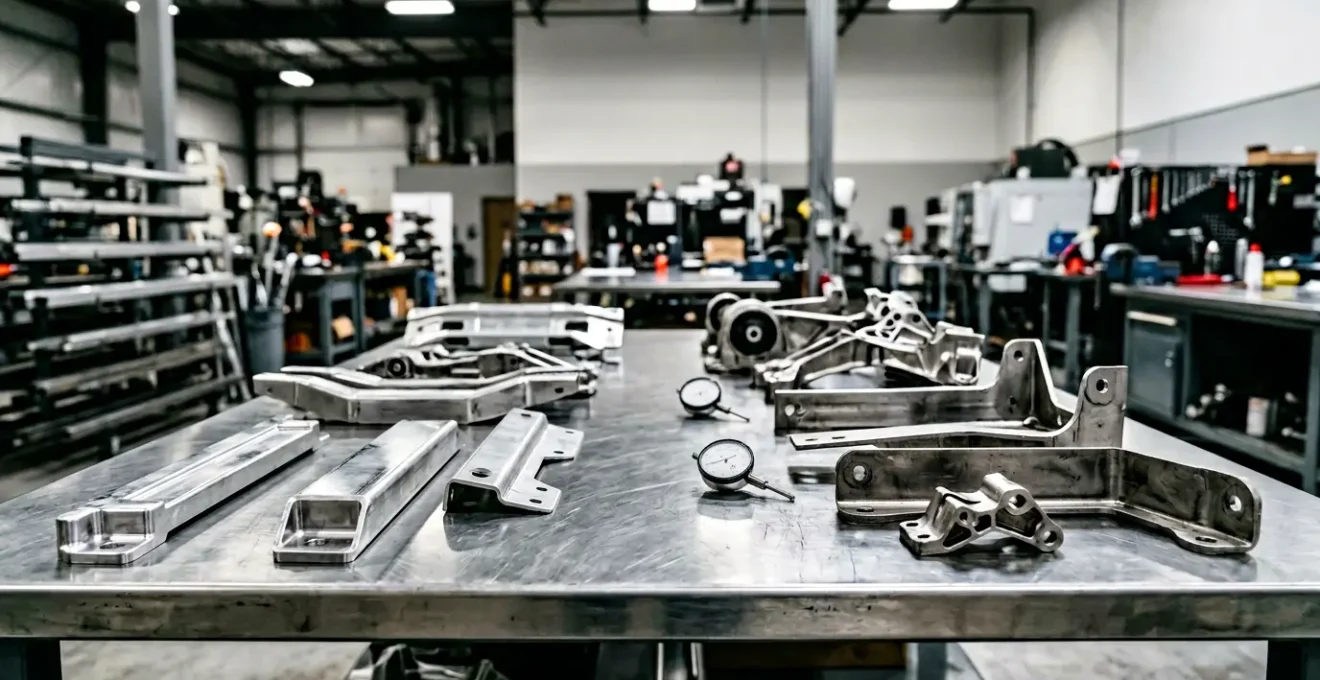
Insisting on Original Equipment Manufacturer (OEM) parts is not a preference; it is a critical safety requirement for any modern vehicle.
- Aftermarket parts can compromise integrated safety systems (ADAS), leading to sensor failure and accidents.
- Using non-OEM components can void your vehicle’s warranty and significantly diminish its resale value, especially if it receives a structural damage classification.
Recommendation: Formally reject your insurer’s attempt to use non-OEM parts by providing them with your vehicle manufacturer’s official repair position statements and citing your legal right to choose a certified repair facility.
After a collision, the phone call you dread most isn’t about the damage; it’s the one from your insurance adjuster. They are often quick to direct you to their “approved repairer,” a facility that has agreed to work within the insurer’s cost-saving parameters. This almost always involves the use of non-OEM, or “aftermarket,” parts. The common wisdom is that OEM parts simply “fit better,” a vague assertion that insurers easily dismiss as a costly preference. They are counting on you not knowing the difference, or being too intimidated to challenge them.
This guide changes that. The debate is not about aesthetics or brand loyalty. It is about a cascade of failures—in safety, structural integrity, and financial value—that using non-genuine parts introduces into your vehicle’s complex ecosystem. A modern car is not a collection of metal panels; it is a networked computer on wheels. Every component, from a bumper to a windshield, is designed as part of an integrated safety system. Compromising a single part can disable the entire network, with devastating consequences.
Here, we will dismantle the insurer’s cost-centric arguments. This is not about opinion; it is about engineering, liability, and your non-negotiable right to a repair that restores your vehicle to its pre-accident state of safety. We will arm you with the expert knowledge and strategic steps required to reject compromises and demand the manufacturer-specified repair you are not just entitled to, but which safety dictates you must have.
This article provides a detailed breakdown of the critical safety and financial arguments you need to make. We will explore everything from sensor calibration to paintwork inspection, giving you the tools to ensure your repair is done right.
Summary: The Definitive Guide to OEM vs. Aftermarket Part Disputes
- Why Your Sensors Must Be Recalibrated After a Bumper Repair?
- How to Reject the Insurer’s “Approved Repairer” to Protect Your Warranty?
- BSI Kitemark vs Manufacturer Approved: Which Guarantee Matters?
- The Category S Write-Off Risk for Minor Structural Damage
- When to Inspect the Paintwork: Why You Should Never Collect at Night?
- Specialist EV Insurance vs Standard Policy: Which Covers Firmware Updates?
- Why Undervaluing Your Rebuild Cost Cuts Your Claim by 50%?
- Why Insuring an Electric Vehicle Costs More Than a Petrol Car?
Why Your Sensors Must Be Recalibrated After a Bumper Repair?
A bumper repair is no longer a simple cosmetic fix. On a modern vehicle, the bumper cover is the housing for a critical array of sensors—radar, ultrasonic, and cameras—that form the eyes and ears of your Advanced Driver-Assistance Systems (ADAS). These systems, including automatic emergency braking and lane-keeping assist, rely on millimeter-perfect alignment to function correctly. A non-OEM bumper may have minute dimensional differences or be made of a material with a different density, either of which can block or distort sensor signals. This is why post-repair calibration is not optional; it’s a fundamental safety procedure.
Even a correctly installed OEM bumper requires precise ADAS recalibration. This process ensures the sensors are aimed exactly as the manufacturer specified. A misaligned sensor can fail to detect an obstacle or, worse, trigger a false positive, causing the car to brake suddenly for no reason. This phenomenon, known as calibration drift, can occur if a repair shop uses generic tools instead of OEM-specific equipment, creating a significant liability. Insurers often fail to account for the cost and complexity of this critical step when pushing for cheaper repairs.
As the image demonstrates, sensor calibration is a laboratory-grade procedure. It requires a controlled environment, specific targets placed at precise distances, and diagnostic tools that communicate directly with the vehicle’s central computer. Demanding that this work is performed to manufacturer standards is the only way to ensure your car’s safety features will work when you need them most.
Action Plan: Key Questions for Your Repairer on ADAS Calibration
- Ask if both static AND dynamic calibration will be performed. Many shops only do the cheaper static procedure to save time.
- Request confirmation that OEM-specific calibration targets and equipment will be used, as generic tools cannot achieve manufacturer specifications.
- Verify that a post-repair diagnostic scan will be performed to confirm all ADAS systems are communicating properly with the vehicle’s computer.
- Obtain written documentation of the calibration procedure, including target placement photos and scan tool readouts showing successful completion.
- Confirm the shop has access to manufacturer repair procedures through I-CAR or OEM subscription services, as outdated methods compromise safety.
How to Reject the Insurer’s “Approved Repairer” to Protect Your Warranty?
One of the most powerful tools an insurer uses is the suggestion that you *must* use their approved repairer. This is fundamentally untrue in most jurisdictions. As the vehicle owner, you have the right to choose where your car is repaired. Exercising this right is the first and most important step in ensuring a safe repair with OEM parts. An “approved repairer” has a primary relationship with the insurer, not with you, and is often contractually obligated to prioritize cost-saving measures, such as using aftermarket parts that could void your manufacturer’s warranty.
Your vehicle’s warranty is a contract that requires maintenance and repairs to be performed to manufacturer specifications. The use of non-genuine parts can give the manufacturer grounds to deny a future warranty claim, arguing that the failure was caused by an unapproved component. Furthermore, if you have a lease or finance agreement, it almost certainly contains a clause requiring the use of “original parts” to protect the lender’s asset. This contractual obligation often supersedes your insurance policy’s preference for cheaper alternatives. You are not just fighting for a preference; you are upholding a legal contract.
Rejecting the insurer’s recommendation should be done formally and in writing. State clearly that you will be using a manufacturer-certified repair facility to protect your warranty, comply with your finance agreement, and ensure the structural integrity of the vehicle. This shifts the conversation from cost to liability—a language all insurers understand.
Action Plan: Strategic Steps to Override Your Insurer’s Choice of Repairer
- Obtain the manufacturer’s position statement: Download official repair policy documents from your vehicle manufacturer’s website that explicitly require OEM parts and certified repair facilities.
- Review your lease/finance agreement: Identify clauses requiring “original parts” or “manufacturer-approved repairs,” which create contractual obligations that supersede insurer preferences.
- Submit a written OEM part request: File a formal request with the insurer, citing manufacturer requirements, lease obligations, and safety concerns with specific part numbers from the dealer catalog.
- Engage your independent shop to document the need: Have your chosen certified repairer provide a detailed estimate showing why OEM parts are necessary to restore the pre-accident safety rating per manufacturer specifications.
- File a formal complaint if denied: Escalate the issue to your state or national insurance regulatory body, citing consumer protection laws and your rights to preserve the manufacturer’s warranty.
BSI Kitemark vs Manufacturer Approved: Which Guarantee Matters?
In the debate over parts, you may hear about certifications like the BSI Kitemark. It’s important to understand what these guarantees mean and, more importantly, what they don’t. A BSI Kitemark (a UK-based standard) is a mark of general quality. It signifies that a product has been tested to meet a certain safety and quality benchmark. However, it is a generic standard, not one specific to your vehicle’s intricate systems. As the British Standards Institution itself notes, this certification provides a strong baseline for quality.
The BSI Kitemark goes much further than CE marking and covers many more characteristics to ensure every certificate holder has their products tested, including ongoing surveillance visits and quality management system monitoring.
– British Standards Institution, BSI Engineering Standards Comparison Guide
While a Kitemarked aftermarket part is certainly better than an untested one, it is not a substitute for a Manufacturer Approved part. A manufacturer’s approval guarantees that the part meets the exact dimensional, material, and performance specifications required to integrate seamlessly with your car’s other components. For a simple item like a wing mirror on an old car, a Kitemarked part might suffice. For a bumper containing radar sensors or a windshield with a camera mount, only a Manufacturer Approved part can guarantee correct function and safety.
The ultimate guarantee is the one that aligns with your vehicle’s specific engineering. A Manufacturer Approved part has been designed and tested as part of the whole vehicle system. The Kitemark is a valuable indicator of quality, and a 2006 consumer survey in the UK revealed that 88% of people trust it, but it cannot guarantee the system-wide integration that modern vehicle safety depends on. When it comes to complex repairs, the manufacturer’s approval is the only guarantee that truly matters.
The Category S Write-Off Risk for Minor Structural Damage
Here lies a dangerous paradox in collision repair: your correct insistence on safe, OEM parts can inadvertently increase the risk of your vehicle being declared a total loss. Insurers classify heavily damaged vehicles to manage risk and cost. A “Category S” (or Cat S) designation means the vehicle has sustained structural damage, and while repairable, the costs are significant. Crucially, an insurer’s decision to declare a car a Cat S write-off is a purely financial one. Industry analysis shows that insurers typically write off a car as Cat S when repair costs hit 50-70% of its pre-accident market value.
This creates a perverse incentive. By pushing for cheaper, non-OEM parts and labour, an insurer can keep the repair estimate just below this threshold, avoiding a total loss payout. However, if you demand a proper repair using OEM structural components and certified technicians—which is often more expensive—you might push the estimate *over* the 50-70% limit. The insurer may then declare the car a write-off, even for what seems like minor structural damage. They would rather pay you the car’s market value than fund a more expensive, but correct, repair.
The consequences of a Cat S designation are severe and long-lasting. Even if you choose to buy back and repair the car, its history is permanently tarnished. Market data indicates that Cat S cars sell for 20-40% less than equivalent non-damaged vehicles. This permanent diminished value is a direct financial loss to you, caused by the insurer’s cost-based decision-making. You must be aware of this risk when negotiating, arguing that a safe repair that preserves the vehicle’s value is the true measure of a fair claim settlement, not just the upfront cost.
When to Inspect the Paintwork: Why You Should Never Collect at Night?
After the battle for OEM parts is won, the final inspection is your last line of defense. The quality of the paintwork is a powerful indicator of the overall quality of the repair. A shop that cuts corners on the finish has likely cut corners on what’s underneath. This is why you must never, under any circumstances, collect your repaired vehicle at night, in the rain, or under the flat, forgiving fluorescent lights of the workshop. These conditions are perfect for hiding imperfections.
You must inspect the car in direct, natural daylight. This is the only way to accurately judge color match, texture, and finish. Look for signs of a poor job: “orange peel” texture where the paint isn’t smooth, halos or dull spots in the clear coat, and visible overspray on trim or glass. Pay close attention to the gaps between panels. Uneven gaps are a tell-tale sign that non-OEM parts with poor fit have been used, forcing the technician to compromise alignment. A color mismatch between the new panel and the original bodywork is another red flag that a non-approved paint system was used.
You don’t need to be an expert to perform a thorough inspection. All you need is daylight and the flashlight on your smartphone. By using angled light, you can reveal flaws that are otherwise invisible. Documenting any issues with photos before you sign off on the repair is crucial evidence if a dispute arises.
Action Plan: The Smartphone Flashlight Paint Inspection Technique
- Position yourself with the light source at a 30-45 degree angle to the painted surface; this reveals “orange peel” texture, halos, and overspray invisible under flat workshop lighting.
- Slowly move the light across panel gaps and body lines. Improper panel alignment from non-OEM parts creates shadows and reveals millimeter-level misalignments.
- Focus on color transition zones between repaired and original panels. Aftermarket parts often have different base coat thicknesses, causing subtle but visible color mismatch.
- Check for “fish eyes” (small crater-like imperfections) by holding the light directly overhead and examining the reflected pattern. These indicate contamination during painting.
- Document all findings with time-stamped photos using the same angled lighting. This creates admissible evidence for disputes within the 14-day reporting window.
Specialist EV Insurance vs Standard Policy: Which Covers Firmware Updates?
Electric vehicles (EVs) introduce a new layer of complexity that standard insurance policies are ill-equipped to handle: the deep integration of hardware and software. In an EV, a windshield isn’t just a piece of glass; it’s a platform for cameras and sensors that are inextricably linked to the vehicle’s operating system. If an insurer insists on a non-OEM windshield, a future over-the-air (OTA) firmware update could fail because the vehicle’s software does not recognize the foreign hardware. This can disable critical safety features, and a standard policy may deny the claim, arguing the fault lies with the non-genuine part, not a collision.
This is where specialist EV insurance policies become essential. They are designed with an understanding of these integrated systems. They are more likely to cover issues arising from software and hardware incompatibility, especially when caused by repairs. The financial risk of using non-genuine parts in an EV is not theoretical. Field data shows that even simple components fail more often; Auto Care Association data demonstrates that up to 25% of non-OEM windshields develop stress cracks, compared to under 2% for genuine glass.
Case Study: Johnson v. XYZ Collision
The risk of insurance denial was established in the 2022 case of Johnson v. XYZ Collision. A North Carolina court upheld a consumer arbitration award after a non-OEM windshield led to ADAS miscalibration. The subsequent claim under collision coverage was denied. The case set a precedent that aftermarket electronic components creating software incompatibility during OTA updates could void standard policy coverage. This highlights the critical need for specialist EV policies that explicitly account for firmware-related failures caused by non-genuine parts.
A specialist policy is more than just insurance; it’s an acknowledgement of the unique technological risks of EV ownership. It provides a crucial layer of protection against the very scenarios that arise from an insurer’s insistence on cutting costs with aftermarket parts.
Why Undervaluing Your Rebuild Cost Cuts Your Claim by 50%?
Insurers can use a tactic that effectively penalizes you for demanding a safe, OEM-spec repair. They do this by undervaluing the true cost of rebuilding your vehicle to its pre-accident condition. An insurer will create an initial estimate based on the cheapest possible parts and labor. This lowball estimate becomes their baseline for the claim’s value. The problem is that non-OEM parts can cost 20-65% less than their genuine counterparts, so this initial estimate is artificially low.
When you (correctly) insist on OEM parts, the repair cost will naturally be higher than this initial estimate. At this point, the insurer may argue that they will only pay *part* of the higher cost, leaving you to cover the “shortfall.” They are effectively applying the principles of under-insurance to your repair. They valued the repair based on substandard parts, and when the true cost is revealed, they refuse to cover it fully. This leaves you with a terrible choice: accept a compromised repair or pay thousands out of pocket to have it done correctly.
This pressure tactic is designed to make fighting for a proper repair financially painful. As one legal analysis points out, this dilemma is at the heart of the OEM parts debate.
Requiring OEM replacement parts can raise the cost of repair to the point of totaling a vehicle which could otherwise be repaired.
– Matthiesen, Wickert & Lehrer Legal Analysis, OEM Parts in Vehicle Repairs Industry Report
The key is to reject the insurer’s initial estimate as an invalid basis for the claim. You must argue from the start that the only legitimate valuation is one based on a manufacturer-specified repair procedure using 100% OEM parts. Do not let them anchor the negotiation to a low, unsafe number.
Key Takeaways
- Your right to a safe repair supersedes an insurer’s preference for cheaper parts. Always assert your right to choose a manufacturer-certified repairer.
- The biggest risks of non-OEM parts are not cosmetic; they are the failure of integrated safety systems (ADAS) and the permanent loss of your vehicle’s value.
- Document everything. Obtain manufacturer position statements, get detailed estimates specifying OEM parts, and perform a meticulous final inspection in daylight before accepting the vehicle.
Why Insuring an Electric Vehicle Costs More Than a Petrol Car?
The higher insurance premiums for electric vehicles are a direct reflection of the principles discussed throughout this guide. The cost to insure a vehicle is based on the potential cost to repair or replace it, and on every metric, EVs are more expensive and complex to fix correctly. The primary driver is the sheer technological density of the vehicle. Every repair, no matter how minor, has the potential to impact the vehicle’s highly integrated electronic and structural systems.
Repairing an EV requires specialized technicians with high-voltage training, dedicated diagnostic equipment, and a deep understanding of how software and hardware interact. The battery pack alone is an incredibly expensive component that often cannot be repaired and must be replaced, costing tens of thousands. Furthermore, as we’ve seen, the proliferation of ADAS features—standard on most EVs—dramatically increases repair costs. Automotive repair industry forecasts indicate this is a major factor, with projections of $4 billion in revenue from ADAS calibrations alone by 2030.
Case Study: The Escalating Cost of a “Minor” Repair
A driver in Raleigh, North Carolina, provides a perfect example of this cost escalation. An aftermarket bumper was installed to save money on a minor repair. Over time, the dimensional variations in the cheap part caused the ADAS sensors to drift out of alignment. This gradual failure resulted in a $2,000 claim to replace the aftermarket bumper with a proper OEM part and perform a complete system recalibration. This illustrates how an initial “saving” on a non-OEM part can lead to significantly higher long-term costs, a risk that insurers price into their premiums for EVs.
Ultimately, insuring an EV costs more because the margin for error in any repair is zero. The systems are too integrated, the components too expensive, and the safety risks too high to allow for the cost-cutting compromises that insurers have relied on for decades with petrol cars. The higher premium is a reflection of the true cost of a safe repair.
By understanding these principles, you are no longer a passive participant in your vehicle’s repair. You are an informed stakeholder equipped to demand the safety and quality you pay for. The next time you are on the phone with an insurer, your conversation will not be about preference; it will be about the non-negotiable requirements of modern vehicle engineering. Take this knowledge and use it to ensure your vehicle is returned to you not just looking right, but being structurally sound and, above all, safe.