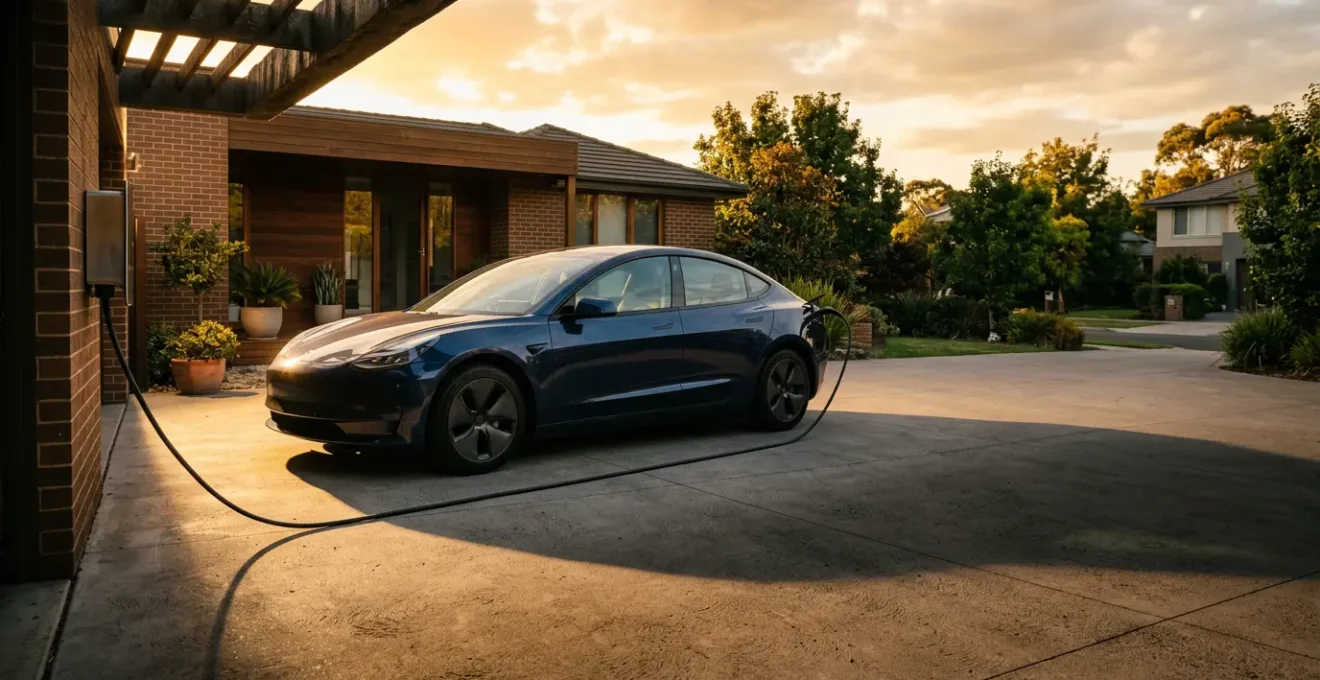
If you’ve recently switched to an electric vehicle, you’re likely enjoying the lower running costs and quieter journeys. But for many UK drivers, the first insurance renewal notice brings a genuine shock. How can a vehicle that is cheaper to fuel and maintain cost so much more to insure than its petrol or diesel counterpart? The common answer points to the high cost of the battery, which is true but only scratches the surface. The real story is far more complex and is woven into the very fabric of modern automotive technology.
Many assume that a higher purchase price is the sole reason for the premium hike. While it’s a factor, it fails to explain why a minor bumper scrape can lead to a four-figure repair bill. The truth lies in the intricate web of sensors, software, and structural components that define a modern EV. A simple physical repair is rarely simple anymore. It has become a gateway to a series of mandatory, high-tech procedures that most standard garages are simply not equipped to handle, forcing insurers to price in this new level of risk.
This isn’t about scaremongering; it’s about understanding the fundamental shift in vehicle technology and its direct impact on your wallet. This article will deconstruct the key factors that contribute to higher EV insurance premiums. We will move beyond the battery to explore the world of systemic recalibration, firmware vulnerabilities, specialised breakdown needs, and why the choice of spare parts has never been more critical. By understanding the ‘why’ behind the cost, you can become a more informed consumer and navigate the insurance market more effectively.
To help you understand the specific elements that drive up your premium, this guide breaks down the core issues, from insuring hardware like batteries and cables to the complexities of software and sensor repairs.
Summary: The True Cost of Insuring Your Electric Vehicle
- Why You Need Specific Cover for Leased Batteries?
- How to Insure Your Wallbox and Cables Against Theft?
- Specialist EV Insurance vs Standard Policy: Which Covers Firmware Updates?
- The Breakdown Exclusion: Are You Covered if You Run Out of Charge?
- When to Switch to an EV Tariff to Lower Your Overall Running Costs?
- Why Your Sensors Must Be Recalibrated After a Bumper Repair?
- How Sharing Your Apple Watch Data Can Lower Your Premium?
- OEM vs Non-OEM Parts: Why Insist on Original Parts for Safety?
Why You Need Specific Cover for Leased Batteries?
One of the most significant cost drivers in an EV is the battery pack itself. It is not just another component; it’s the heart of the vehicle and its most valuable single part. In fact, the battery alone can represent up to 50% of the entire vehicle’s price tag. This immense value concentration immediately elevates the financial risk for insurers in the event of a total loss. However, the situation becomes even more complex when the battery is not owned by the vehicle driver, a model pioneered in the UK market by vehicles like the early Renault Zoe.
In a battery lease arrangement, you own the car’s body, but a third party owns its most expensive component. This split-ownership model creates a legal minefield for standard insurance policies. Who is liable if the leased battery is damaged in an accident or stolen? A standard policy might only cover the value of the vehicle chassis you own, leaving a massive financial gap and a contractual dispute with the battery leasing company. This is why a specialist EV policy is not a luxury but a necessity in these cases.
These policies contain specific clauses that explicitly extend cover to the leased battery, treating it with the same level of protection for theft, fire, and accidental damage as if you owned it outright. The Renault Zoe battery lease scheme set a precedent, forcing the insurance industry to develop products that could navigate the legal complexity of insuring an asset where ownership is divided. Without this specific cover, you could find yourself responsible for replacing a multi-thousand-pound battery out of pocket, even if you had fully comprehensive insurance on the car itself.
How to Insure Your Wallbox and Cables Against Theft?
The insurance risk for an EV owner doesn’t end with the vehicle itself; it extends to the essential charging equipment. Your charging cable and home wallbox are valuable assets, and unfortunately, they are increasingly becoming targets for theft. The copper within the cables makes them attractive to criminals, and with the rise of EVs, incidents are growing. For instance, cable theft has reached epidemic proportions in some areas, with Seattle alone reporting over 100 cases in a single year, a trend being seen across the globe.
A common and costly mistake is assuming your car insurance automatically covers all your charging gear. The reality is more nuanced, and cover often depends on where the equipment is and how it’s installed. As insurance provider State Farm clarifies, the distinction is crucial:
Portable cords likely fall under your auto policy if stolen from the vehicle, but permanently installed home chargers are often tied to your homeowners, renters or condo policy.
– State Farm Insurance, Electric Car Insurance Explained: Costs & Coverage
This means your portable charging cable stored in the boot is likely covered by your auto policy’s personal effects limit. However, your expensive, professionally installed wallbox is considered part of your property. If it’s damaged or stolen, you would need to claim on your home insurance, not your car insurance. This can affect your home policy’s no-claims bonus and may be subject to a different excess. Always check both policies to understand where you are covered and where potential gaps may exist.
Your Action Plan: Auditing Your EV Charging Security
- Identify Points of Risk: List every location where you charge your vehicle (home driveway, garage, public charger) and what equipment is used (portable cable, fixed wallbox).
- Inventory Your Assets: Note the replacement cost of your wallbox and any portable charging cables. Keep receipts and serial numbers.
- Check Policy Wording: Review both your car and home insurance documents. Look for “personal effects” cover on the auto policy and “fixtures and fittings” on the home policy. Confirm the cover limits.
- Assess Physical Security: Are your cables stored out of sight? Does your wallbox have a lock? Could you install a security camera or motion-sensor light?
- Plan for Gaps: If you find your cover is inadequate (e.g., a low personal effects limit), contact your insurers to ask about increasing it or adding a specific item to your policy.
Specialist EV Insurance vs Standard Policy: Which Covers Firmware Updates?
Modern vehicles, and EVs in particular, are as much about software as they are about hardware. Over-the-air (OTA) firmware updates can enhance performance, add new features, and patch security flaws. However, this deep integration of software introduces risks that standard insurance policies were never designed to cover. The difference in risk is one reason why, on average, EVs cost up to $44 more per month to insure than conventional cars. A key part of that risk is rooted in the vehicle’s code.
A standard policy is built to cover physical damage—dents, scratches, and mechanical failures. But what happens if a faulty firmware update “bricks” your car’s central computer, rendering it undrivable? Or if a cybersecurity breach allows a hacker to remotely disable your vehicle? These are not hypothetical scenarios; they are emerging risks that fall into a grey area for traditional insurers. As the American Automobile Association (AAA) notes, this software dependency is a major concern:
Advanced software systems can make EVs more vulnerable to cybersecurity threats, which can compromise both vehicle safety and data security.
– AAA (American Automobile Association), The Real Costs of Electric Vehicle Insurance
This is where specialist EV insurance provides critical value. These policies often include specific cover for “bricking” caused by a legitimate manufacturer update and may offer protection against malicious cyber-attacks. They recognise that the vehicle’s software is an insurable component, just like the engine or transmission in a petrol car. A standard policy, in contrast, may reject a claim for a software-induced failure, arguing that no physical damage occurred. This firmware interdependency—the reliance of physical systems on software integrity—is a core reason why a generic policy is often insufficient for an EV.
The Breakdown Exclusion: Are You Covered if You Run Out of Charge?
For any driver, breaking down is a major inconvenience. For an EV driver, the fear of running out of charge—often termed ‘range anxiety’—is a unique concern. A common assumption is that any breakdown service will be able to help, regardless of the cause. However, this is a dangerous assumption, as many standard breakdown policies contain a critical exclusion that can leave an EV driver stranded.
Many traditional policies treat running out of charge the same way they treat running out of petrol: as driver negligence. Consequently, they may explicitly exclude recovery for a flat battery. If you call them, they may charge you a significant fee for the service or refuse to attend altogether. This is because recovering an EV with a dead battery is not as simple as bringing a jerry can of fuel. The vehicle cannot be towed on its driven wheels without risking damage to the electric motors, a process known as ‘flat towing’.
This requires either a flatbed truck for full recovery to a charging point or a roadside van equipped with a powerful mobile charging unit. Both options require specialised equipment and training, which is why they are often only available through EV-specific breakdown cover. These dedicated policies guarantee they will attend for a flat battery, either by providing enough roadside charge to get you to the nearest station or by recovering your vehicle to a charger of your choice. Without this specific cover, the ‘comprehensive’ breakdown assistance you thought you had could prove useless when you need it most.
When to Switch to an EV Tariff to Lower Your Overall Running Costs?
While insurance is a significant expense, it’s crucial to view it within the context of the total cost of ownership. One of the primary benefits of driving an EV is the substantial saving on fuel and maintenance. According to one study, EVs cost about $330 less per year in maintenance compared to internal combustion engine vehicles due to fewer moving parts. However, the biggest saving comes from fuel, and you can maximise this by aligning your energy supply with your driving habits.
Charging an EV on a standard flat-rate electricity tariff can still be cheaper than buying petrol, but you’re missing a major opportunity to save. This is where specialist EV energy tariffs come in. Offered by many UK energy suppliers, these tariffs provide a window of several hours during the night (e.g., 12 am to 5 am) where the price of electricity is drastically reduced. By using your car’s scheduled charging function or your smart wallbox, you can automatically charge your vehicle during this cheap-rate period.
The switch makes financial sense the moment you start charging regularly at home. If you rely solely on public chargers, an EV tariff is irrelevant. But if you have a home wallbox, the savings can be substantial, often cutting your ‘fuel’ cost by 50-75% compared to a standard electricity rate. This can easily save you hundreds of pounds per year, directly offsetting the higher cost of your insurance premium. The key is to see your car and home energy as an integrated system, optimising charging times to slash your overall running costs and make the EV proposition even more compelling.
Why Your Sensors Must Be Recalibrated After a Bumper Repair?
Here we arrive at the core of why EV insurance is so expensive, and it has little to do with the battery. The primary driver is the complexity and cost of repairing the Advanced Driver Assistance Systems (ADAS). Your vehicle is equipped with a sophisticated network of cameras, radar, and ultrasonic sensors—embedded in the bumpers, wing mirrors, and windscreen—that manage everything from parking assist to automatic emergency braking. After even a minor physical impact, these sensors must be recalibrated with millimetric precision.
This process of systemic recalibration is non-negotiable. A sensor that is misaligned by even a single degree could fail to detect an obstacle, with potentially catastrophic consequences. This procedure cannot be done by a standard mechanic; it requires a clean, dedicated workshop space, specialised laser-guided alignment rigs, and highly trained technicians. The process is time-consuming and expensive; the average ADAS calibration runs about $500, and that’s on top of the physical repair itself. This is what insurers call a “diagnostic cascade”—a simple cosmetic job triggers a complex and costly electronic procedure.
A real-world example perfectly illustrates how costs can spiral, transforming a seemingly straightforward repair into a major insurance claim.
Case Study: The $6,500 Door Dent
A Wall Street Journal investigation documented a seemingly minor door dent on a 2023 Subaru Impreza in Schenectady, New York. What appeared to be a simple cosmetic fix totaled $6,500 because the vehicle’s advanced driver assistance system required mandatory recalibration following the repair. This case perfectly illustrates how ADAS technology transforms routine repairs into complex, expensive procedures, directly explaining the spike in EV insurance premiums.
When your insurer calculates your premium, they aren’t just pricing the risk of a dented bumper. They are pricing the risk of a dented bumper plus the mandatory, multi-hundred-pound recalibration that must follow. This is the hidden cost that surprises so many EV owners and the central reason for higher premiums.
How Sharing Your Apple Watch Data Can Lower Your Premium?
Faced with high base premiums, many EV drivers are looking for ways to prove to insurers that they are low-risk. This has accelerated the adoption of Usage-Based Insurance (UBI), also known as telematics. Traditionally, this involved installing a ‘black box’ in your car to monitor speed, acceleration, and braking. However, the next evolution of UBI is using data you already generate from personal wearable devices like an Apple Watch or Fitbit.
The logic from an insurer’s perspective is that a responsible individual is often a responsible driver. Data from your smartwatch can paint a detailed picture of your lifestyle and habits. Insurers can use metrics like stable sleep patterns, regular physical activity, and a low resting heart rate as proxies for a conscientious, low-risk person. While this practice is still emerging in the UK auto market, it’s a clear trend, with providers like Tesla already having introduced its first usage-based EV insurance product in Texas in 2021.
By voluntarily sharing this anonymised health data, you provide an insurer with powerful evidence that you are less likely to engage in risky behaviour behind the wheel. In return for this transparency, they can offer significant discounts on your premium. It represents a shift from insuring a vehicle based on generic demographic data (age, postcode) to a highly personalised premium based on real-world driving behaviour and lifestyle indicators. For EV owners facing high quotes, agreeing to share telematics data—whether from the car or a wearable—is becoming one of the most effective tools for actively managing and reducing their insurance costs.
Key Takeaways
- The high cost is driven by repair complexity, not just the vehicle’s purchase price.
- Even minor cosmetic damage necessitates expensive recalibration of Advanced Driver Assistance Systems (ADAS).
- Specialist EV insurance is vital to cover risks like leased batteries, firmware issues, and running out of charge, which standard policies often exclude.
OEM vs Non-OEM Parts: Why Insist on Original Parts for Safety?
The final piece of the cost puzzle lies in the parts used for repairs. When a petrol car is repaired after an accident, using non-original or ‘pattern’ parts is common practice to reduce costs. For an EV, this is an extremely risky strategy that most specialist insurers and repairers will not entertain. Insisting on Original Equipment Manufacturer (OEM) parts is not about brand loyalty; it’s about safety, warranty, and functionality.
An EV’s body and chassis are not just a shell; they are an integral part of the battery’s protection system. OEM parts are engineered with precise tensile strengths and crumple characteristics designed to protect the high-voltage battery pack from being punctured in a crash—an event that could lead to a dangerous thermal runaway fire. A non-OEM wing or bumper may not have been subjected to the same rigorous safety testing, introducing a huge unknown into the vehicle’s structural integrity.
Furthermore, using non-OEM parts can instantly void your vehicle’s battery warranty, which can be valid for up to 8 years. A potential saving of a few hundred pounds on a pattern part could risk the loss of a warranty worth over £10,000. This is why insurer-approved repair networks for EVs will almost exclusively use OEM parts, and the higher cost of these components is factored directly into your insurance premium. The table below summarises the critical differences.
| Criteria | OEM Parts | Non-OEM Parts |
|---|---|---|
| Battery Warranty Impact | Maintains full 8-year manufacturer warranty | May void multi-thousand-pound battery warranty |
| Insurance Approval | Mandated by most insurers for EV repairs | Often rejected by insurer-approved networks |
| Structural Battery Protection | Engineered tensile strength for crash protection | May lack precise crumple characteristics |
| Thermal Runaway Risk | Certified to prevent battery puncture | Unknown safety certification status |
| Repair Network Access | Available through insurer-approved repairers | Limited availability; locks out many garages |
| Average Cost Premium | Baseline (higher but warranty-compliant) | Lower upfront but potential warranty loss risk |
Ultimately, insuring an electric vehicle effectively requires a shift in mindset. To secure the right protection at the fairest price, your best course of action is to seek out brokers and insurers who specialise in EVs and can provide a quote that accurately reflects your vehicle’s modern complexities.