The greatest financial risk for UK homeowners is not a fire or flood, but a simple calculation error that allows insurers to legally reduce your payout by tens of thousands of pounds.
- Underinsuring your home activates the « Average Clause, » a punitive formula that makes you co-insurer for any loss.
- Standard tools like the BCIS calculator have critical blind spots for listed buildings, complex sites, and material cost surges.
Recommendation: Treat your rebuild cost not as an estimate, but as a precise figure that must be professionally validated and updated based on specific triggers, not just time.
For most homeowners, buildings insurance is a necessary but unexamined expense. The annual renewal notice arrives, the premium is paid, and a sense of security settles in. Yet, this security often rests on a dangerously flawed assumption: that the ‘sum insured’ is a rough guess. Many confuse it with market value, pluck a figure from the air, or rely on outdated valuations. This is a mistake that can have catastrophic financial consequences. The reality is that your buildings insurance policy is a precise contract, and a single error in your rebuild cost calculation can trigger punitive clauses you likely don’t know exist.
The common advice to « not confuse market value with rebuild cost » is correct but woefully incomplete. It fails to explain the mechanism of failure. The true danger lies in the fine print, in clauses designed to penalize undervaluation. The insurance industry does not operate on goodwill; it operates on risk assessment and contractual obligation. If you have not declared the correct value, you have not paid the correct premium for the risk, and the insurer is entitled to reduce their liability accordingly. This isn’t a possibility; it’s a mathematical certainty written into the majority of UK policies.
This guide moves beyond generic warnings. It adopts the precise, cautious perspective of a chartered surveyor to dissect the real-world risks. We will deconstruct the punitive ‘Average Clause’, explore the limitations of standard valuation tools, and identify the specific events that demand an immediate reassessment of your sum insured. The goal is to equip you with the knowledge to transform your insurance from a hopeful guess into a robust financial safeguard, ensuring that if the worst happens, you receive the full amount you are entitled to, not the fraction your insurer is obligated to pay.
To navigate this critical topic, this article breaks down the essential components of an accurate and resilient buildings insurance valuation. Explore the sections below to understand the specific risks and the actions required to mitigate them.
Contents: Buildings Insurance Rebuild Cost Explained
- Why Undervaluing Your Rebuild Cost Cuts Your Claim by 50%?
- How to Use the BCIS Calculator to Estimate Your Rebuild Cost?
- Grade II Listed Homes: Why Standard Buildings Insurance Is Not Enough?
- The Notification Error That Voids Cover During Building Works
- When to Update Your Rebuild Cost: Annually or After Every Improvement?
- Why Dry Summers Cause Cracks in Properties Built on Clay?
- Why Your Flat Might Not Qualify for the Government Flood Re Scheme?
- Subsidence vs Heave: Which Foundation Risk Is Covered by Insurance?
Why Undervaluing Your Rebuild Cost Cuts Your Claim by 50%?
The single most dangerous misconception in UK home insurance is that a small undervaluation of your rebuild cost is a minor issue. In reality, it can be financially devastating due to a standard policy condition known as the ‘Average Clause’. This clause is not a discretionary penalty; it is a mathematical formula that your insurer will apply if you are underinsured. It effectively makes you a co-insurer for a proportion of any loss, regardless of the claim’s size. Worryingly, it is estimated that over 70% of UK properties are underinsured, leaving millions of homeowners exposed.
Let’s examine how the formula works with a concrete example. Imagine the true, professional rebuild cost of your home is £500,000. However, you have insured it for only £300,000, perhaps confusing it with its market value. You are therefore insured for only 60% of the correct value. Now, a severe fire causes £200,000 worth of damage. You might assume your £300,000 cover is more than sufficient. You would be wrong.
The insurer will apply the Average Clause: they will only pay the same percentage of the claim as the percentage you are insured for. In this case, they will pay just 60% of your £200,000 claim, which amounts to £120,000. You are left with an £80,000 shortfall that you must find yourself to complete the repairs. Your undervaluation has directly cost you a significant sum, demonstrating that the sum insured is not a ceiling for a total loss, but a critical factor in every single claim.
How to Use the BCIS Calculator to Estimate Your Rebuild Cost?
For standard properties, a primary tool recommended by insurers is the free online calculator from the Building Cost Information Service (BCIS), which is part of the Royal Institution of Chartered Surveyors (RICS). Using it correctly requires more than simply inputting your postcode; it demands accurate measurements. The core input is the gross external floor area of your property, which means measuring the outside dimensions (length and width) of each floor. Using internal measurements from an estate agent’s floor plan will lead to an underestimate.
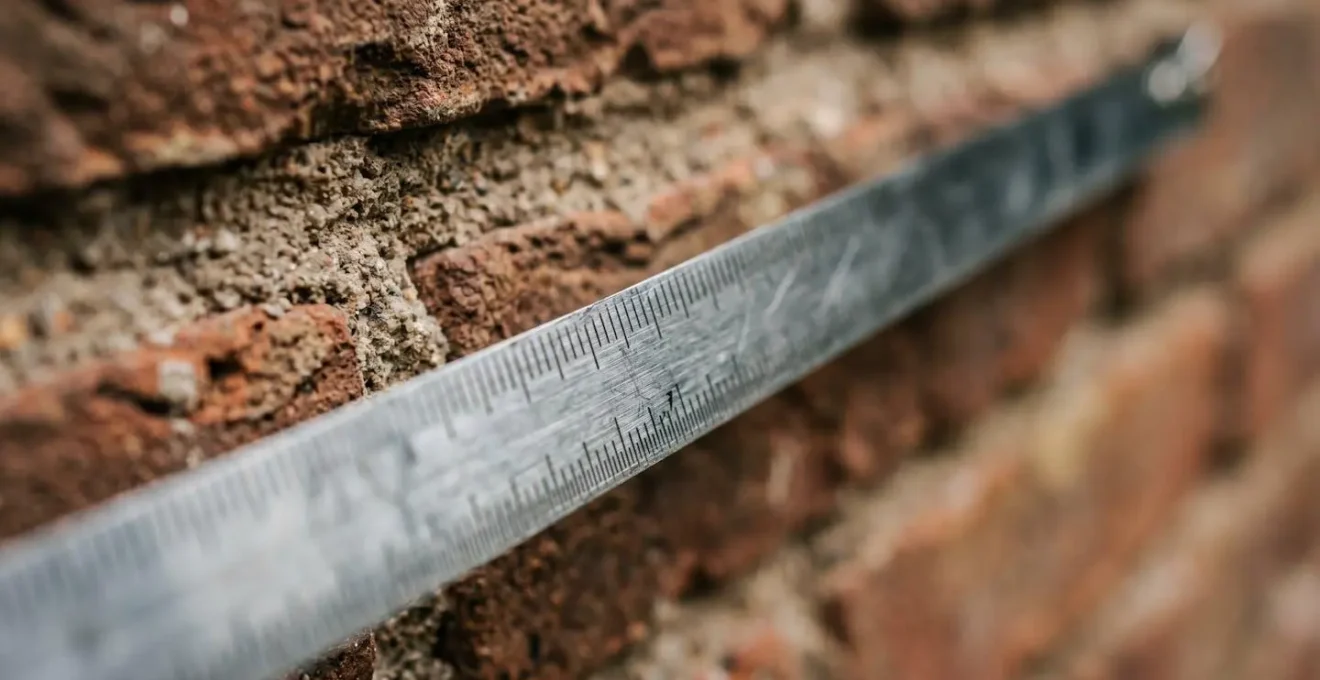
As the image illustrates, precision in measurement is foundational. A useful tool for this is Google Earth Pro, which has a ruler function to help you measure the building’s footprint accurately from satellite imagery. However, a chartered surveyor’s primary role is to understand a tool’s limitations. The BCIS calculator is not a universal solution and has critical blind spots. It is your responsibility to know when not to use it.
Crucially, the calculator is not designed for non-standard properties. The BCIS explicitly states it should not be used for listed buildings, properties built before 1720, or those with unusual construction like a timber frame. Furthermore, it cannot account for site-specific complexities. If your property is on a steep slope, has difficult site access, or would require extensive demolition and clearance, the calculator’s estimate will be too low. In these cases, a prudent homeowner should add 10-15% to the figure or, for absolute certainty, commission a formal Rebuild Cost Assessment from a RICS chartered surveyor. The free calculator is a starting point, not a definitive answer.
Grade II Listed Homes: Why Standard Buildings Insurance Is Not Enough?
Owning a listed building is to be a custodian of history, but it comes with stringent legal obligations that render standard buildings insurance entirely inadequate. The core issue is not just that repairs are more expensive; it’s that you have no choice in the matter. As guidance from Historic England makes clear, rebuilding a listed building using original materials and methods is a legal requirement, regardless of cost. This legal mandate is what drives the significant premium increase, with data showing the median annual policy for a Grade II listed building is £495, substantially higher than for standard homes.
A standard policy’s rebuild cost is based on modern materials and labour rates. This is fundamentally incompatible with heritage properties. Consider the following real-world scenario that highlights this gap.
Case Study: The Hidden Costs of Heritage Property Restoration
A Tudor property constructed with wattle and daub on a timber frame requires specialist tradespeople who can work with traditional materials including mud, clay, and straw mixtures. Standard insurance policies fail to cover the significant cost differential: period-specific reclaimed materials can cost multiple times more than modern equivalents, and master craftspeople with heritage skills command premium daily rates that standard rebuild cost estimates do not account for.
This illustrates the problem perfectly. You cannot simply replace a damaged oak beam with modern treated timber or repair a lime plaster wall with gypsum. You must source period-correct materials and hire artisans with skills that are now rare and expensive. A standard insurance policy will not cover this cost differential, leaving you with a massive shortfall and a legal obligation to complete the work to the conservation officer’s specification. Specialist listed building insurance is not a luxury; it is the only way to cover this mandated, and often astronomical, cost.
The Notification Error That Voids Cover During Building Works
A common but perilous oversight for homeowners is failing to inform their insurer before undertaking significant building works, such as an extension or loft conversion. This is not a minor administrative error; it can be treated as a ‘material non-disclosure’, giving your insurer grounds to void the entire policy. The moment you begin renovations, the risk profile of your property changes dramatically. The site is exposed to new perils: increased fire risk from tools and wiring, higher chances of theft due to scaffolding and unsecured access, and a greater likelihood of water damage from exposed structures.
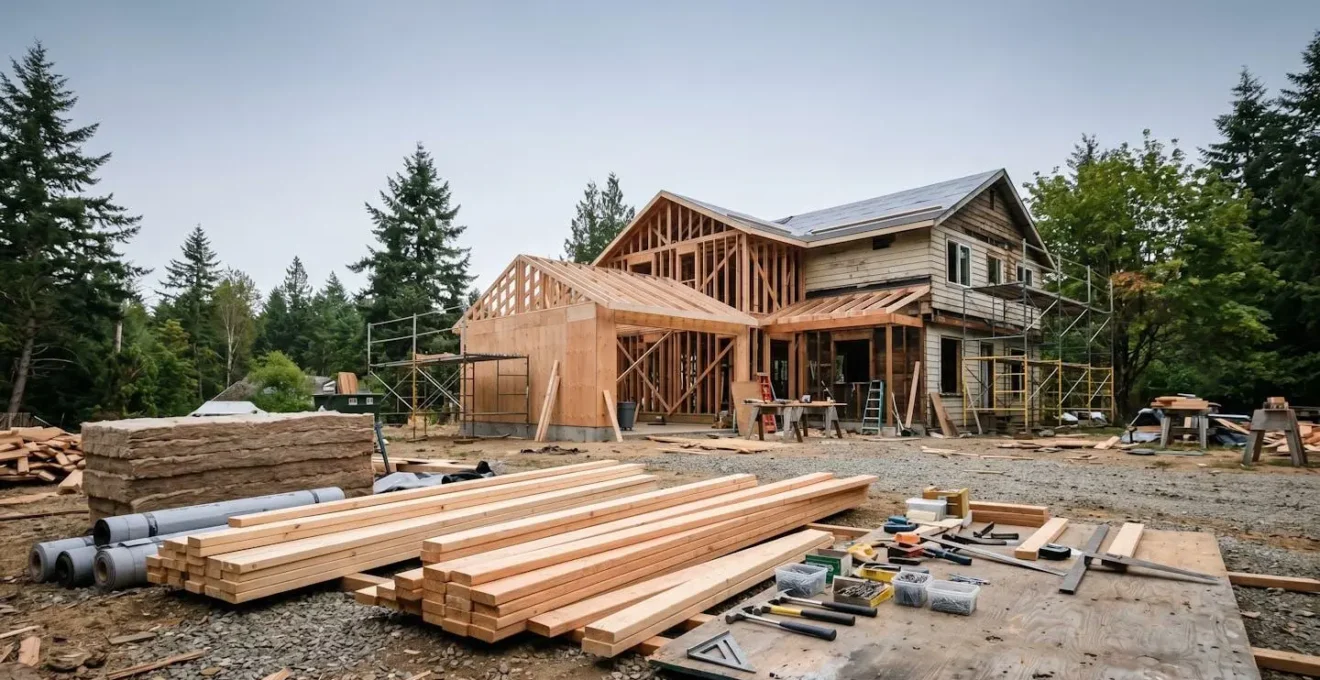
Your original insurance policy was priced based on the risk of a completed, secure, and occupied home. A building site is a completely different proposition. By not notifying your insurer, you are denying them the opportunity to reassess this new, higher level of risk and adjust the premium or terms accordingly. Most insurers will need to be informed of any work costing more than a certain threshold (e.g., £20,000) or lasting more than 30 days.
The consequences of this failure can be absolute. If a fire breaks out during the renovation and you haven’t informed your insurer, they can—and likely will—refuse the claim entirely, arguing that the policy was invalid from the moment the work began. They may return your premium and walk away, leaving you with a partially built, fire-damaged house and no financial recourse. Before any sledgehammer is swung, your first action must be to contact your insurer, detail the planned works, and secure their written confirmation of continued cover, which may involve a specific ‘renovation insurance’ policy or an endorsement on your existing one.
When to Update Your Rebuild Cost: Annually or After Every Improvement?
Relying on your insurer’s automatic index-linking to keep your rebuild cost up to date is a passive and potentially dangerous strategy. While insurers increase your sum insured each year, this is often tied to a general measure of inflation like the Consumer Price Index (CPI), which does not accurately reflect the volatile nature of building material and labour costs. The Building Cost Information Service (BCIS) itself advises against this reliance, stating that BCIS recommends that the rebuilding cost is checked regularly (at least every five years), rather than relying on index linking over long periods.
However, a fixed five-year review is also too simplistic. A proactive approach requires you to reassess your rebuild cost based on specific triggers. The most obvious trigger is any major renovation that alters the property’s footprint, such as an extension or loft conversion. The moment your gross external floor area increases, your previous valuation is obsolete. But a full reassessment is also warranted after an accumulation of smaller, high-value projects over several years, like a new kitchen, a bathroom refurbishment, and the installation of bi-fold doors.
Furthermore, external factors must be considered. The sharp increase in material and labour costs post-2020, driven by supply chain disruption, meant that many properties became significantly underinsured almost overnight. If your last assessment was before this period, it is almost certainly too low. An accurate rebuild cost is a moving target, and responsibility for tracking it lies with you, the homeowner, not your insurer.
Action Plan: Rebuild Cost Recalculation Triggers
- Annual Review: Check your insurer’s index-linking percentage at renewal. If it seems low compared to news reports on building cost inflation, it’s a red flag.
- After Major Renovations: Recalculate immediately following extensions, loft conversions, or any structural work that changes your total floor area.
- Cumulative Improvements: If you’ve completed multiple smaller projects (new bathroom, kitchen upgrade) over 2-3 years, conduct a full reassessment.
- Technology Installations: Installing solar panels, heat pumps, or other significant renewable technology adds value and requires a rebuild cost update.
- Post-Pandemic Cost Surge: If your last professional assessment was pre-2020, recalculate now to account for recent dramatic increases in material and labour costs.
Why Dry Summers Cause Cracks in Properties Built on Clay?
The UK is experiencing hotter, drier summers, and this climatic shift has a direct physical impact on a huge portion of the country’s housing stock, particularly in the South East of England. Many properties are built on clay soil, which behaves like a sponge: it swells when wet and shrinks dramatically when it dries out. During prolonged dry spells or heatwaves, the clay subsoil loses moisture and contracts, causing the ground beneath a building’s foundations to sink. This downward movement is known as subsidence, and it is a leading cause of major structural damage claims. The scale of the problem is significant, with the Association of British Insurers (ABI) reporting that claims for subsidence hit £60 million between April and June 2024, the highest quarterly figure on record.
The first sign of subsidence is often the sudden appearance of cracks in the building’s fabric. However, not all cracks are a cause for alarm. It is vital for homeowners to distinguish between minor cosmetic plaster cracks and the tell-tale signs of structural movement. Subsidence cracks typically have distinct characteristics: they are often diagonal, wider at the top than the bottom, and tend to appear around openings like doors and windows. A crack wider than 3mm (the approximate width of a £1 coin) that appears suddenly, especially after a dry summer, is a serious warning sign.
Another contributing factor is the presence of large, « thirsty » trees like oaks, willows, and poplars. These trees can draw huge volumes of water from the soil, exacerbating the drying and shrinking of clay during a drought. If such a tree is closer to your home than 1.5 times its mature height, it poses a significant risk. If you spot any of these warning signs, the correct course of action is to commission an inspection by a chartered surveyor or structural engineer to diagnose the cause before even considering an insurance claim.
Why Your Flat Might Not Qualify for the Government Flood Re Scheme?
The Flood Re scheme was a landmark initiative designed to make flood insurance affordable for homeowners in high-risk areas. However, a significant portion of the population is excluded due to a structural technicality: the scheme is generally not available for leasehold flats and maisonettes. This leaves millions of flat-dwellers in a precarious position, often without access to the subsidised cover their neighbours in houses can obtain. The problem lies in the way flats are insured.
Typically, a block of flats is covered by a single ‘block policy’ arranged by the building’s freeholder or management company. This policy covers the entire structure. The Flood Re scheme, however, was designed to apply to individual domestic properties where the policyholder is the freeholder. Because a management company is often a commercial entity, the block policy it holds is usually deemed ineligible for the scheme.
Case Study: The Leasehold Flood Re Eligibility Barrier
In England and Wales, flats and maisonettes are typically block-insured under a single policy arranged by the freeholder or management company. Since Flood Re is designed for individual domestic properties held by the building’s freeholder, and management companies are often commercial entities, the collective building policy for a block of flats is generally ineligible for the Flood Re scheme. This leaves individual leaseholders unable to access subsidized flood insurance for the building structure, though they remain responsible for ensuring their contents insurance includes adequate flood protection.
This leaves individual leaseholders exposed. While they are not directly purchasing the buildings insurance, they are still financially responsible for their share of any repair costs through service charges. If the block policy has a huge excess for flood or excludes it entirely, the financial burden of a flood event will fall on the leaseholders. Therefore, flat-dwellers in flood-risk areas must be proactive: obtain a copy of the block policy, question the level of flood cover at residents’ meetings, and ensure their own contents insurance has robust flood protection, as this is their only direct line of defence.
Key Takeaways
- The ‘Average Clause’ is a standard feature that proportionally reduces your claim payout if you are underinsured.
- The BCIS calculator is a useful guide but is not suitable for listed, pre-1720, or structurally complex properties.
- Failure to notify your insurer of major building works can void your policy entirely due to a material change in risk.
Subsidence vs Heave: Which Foundation Risk Is Covered by Insurance?
When it comes to foundation movement, insurers draw a very fine but critical line between different causes. Standard buildings insurance policies are designed to cover subsidence (the downward sinking of the ground beneath foundations) and heave (the upward swelling of the ground), as these are typically caused by external factors like soil shrinkage or leaking drains. However, there is a third type of movement that is almost universally excluded: settlement. This distinction is the primary reason many foundation-related claims are denied.
Subsidence (ground sinking due to external factors) is generally covered, but Settlement (the natural downward movement of a new building) is never covered and is a primary reason for claim denials.
– UK Home Insurance Policy Standards, Buildings Insurance Coverage Definitions
Settlement is the natural, initial compaction of the ground under the load of a new building or extension. It is considered an inevitable part of the construction process, and any resulting damage is deemed a defect in design or workmanship, not an insurable peril. The burden of proof falls squarely on the homeowner to demonstrate that the damage is caused by subsidence or heave, not settlement. Insurers will investigate thoroughly to rule out settlement or poor building work before they accept a claim.
Making a successful subsidence claim is an evidence-led process. You cannot simply point to a crack and expect a payout. You must be prepared to commission a chartered surveyor’s report to professionally diagnose the cause of movement, which can cost between £400 and £1,500. You will also need to demonstrate that the cracking has progressed over time, typically by monitoring it for at least 6-12 months with tell-tales. It is also important to understand that the policy covers the *effect* (repairing the cracks) but not always the *cause* (fixing a broken drain or removing a tree), which may remain your financial responsibility.
Ultimately, ensuring your property is correctly insured is an act of proactive risk management. By taking the time to secure an accurate rebuild valuation and understanding the specific triggers for reassessment, you are not just buying a policy; you are guaranteeing your financial resilience. To put these principles into practice, the next logical step is to conduct a thorough review of your current sum insured against the realities of today’s building costs.