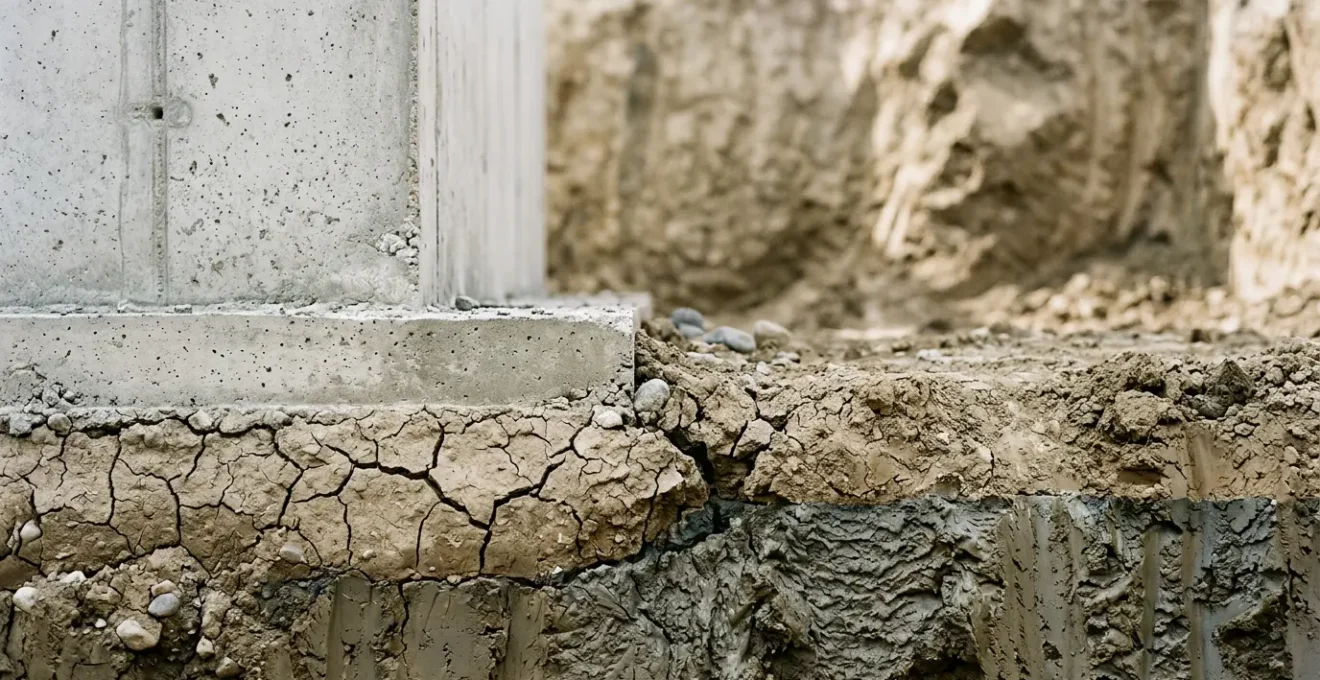
The appearance of cracks in homes built on clay soil is a predictable engineering problem, not a random disaster, especially after dry summers.
- Subsidence and heave are driven by changes in soil moisture, a process accelerated by heatwaves and large trees.
- Proactive monitoring, strategic communication with insurers, and correct rebuild cost valuation are your most powerful tools to mitigate risk.
Recommendation: Instead of immediate alarm, begin a structured monitoring process to understand the crack’s behaviour before engaging insurers or contractors.
For any homeowner, particularly in the clay-rich grounds of London and the South East, discovering a new crack in a wall can be deeply unsettling. The mind immediately jumps to the worst-case scenario: subsidence. This fear is magnified during the increasingly hot and dry summers, where anecdotal evidence of shifting foundations seems to be everywhere. The common advice is often a mix of alarm and ambiguity: measure the crack, check if a 10p coin fits, and call your insurer immediately. While well-intentioned, this approach lacks the technical nuance required for such a significant issue and can sometimes lead to premature and costly decisions.
The reality is that not all cracks signify a structural catastrophe. The ground beneath our homes is a dynamic environment. It swells with winter rains (heave) and shrinks in summer droughts (subsidence). As a structural engineer, my primary message is one of reassurance: the forces at play are understandable and, in most cases, manageable. The key is to move from a position of passive worry to one of proactive, informed risk management. Understanding the specific mechanics of soil behaviour, the real risks posed by vegetation, and the precise language of your insurance policy empowers you to take control.
This guide is designed to provide that engineering-led perspective. We will demystify why clay soils are so reactive, provide a clear methodology for monitoring cracks, and compare modern repair techniques. Crucially, we will also navigate the complex decisions around insurance: when to notify, when to claim, and how to ensure you are correctly covered in the first place. This is not about causing alarm, but about building confidence through knowledge.
This article provides a structured path to understanding and managing foundation risks. Explore the sections below to gain a clear, engineering-led perspective on protecting your property.
Summary: Subsidence, Heave, and Protecting Your Property
- Why Dry Summers Cause Cracks in Properties Built on Clay?
- How to Monitor Wall Cracks Before Calling the Insurer?
- Mass Concrete vs Resin Injection: Which Underpinning Method Is Less Disruptive?
- The Willow Tree Risk That Can Devalue Your Home by 20%
- When to Notify Your Insurer About Cracks: Immediately or After Monitoring?
- Why Undervaluing Your Rebuild Cost Cuts Your Claim by 50%?
- The EPC « C » Rating Rule That Could Make Your Rental Illegal
- Buildings Insurance: How to Calculate Rebuild Cost Correctly?
Why Dry Summers Cause Cracks in Properties Built on Clay?
The fundamental reason your property is susceptible to cracks lies in the physical properties of the soil beneath it. Much of London and the South East is built on expansive clay soils. From an engineering perspective, it’s best to think of this clay not as solid ground, but as a giant, slow-moving sponge. Its microscopic, plate-like particles have a high capacity to absorb and release water. This characteristic, known as soil plasticity, is the root cause of both subsidence and heave.
During prolonged dry spells and heatwaves, the clay begins to lose its moisture through evaporation and absorption by plant roots. As it dries, it shrinks in volume, causing the ground to subside. If your home’s foundations are not deep enough to reach more stable ground, they will move downwards with the shrinking soil. This differential movement places immense stress on the rigid structure of your house, resulting in the characteristic diagonal cracks that often appear around windows and doors. The scale of this issue is significant; in the UK, there were over 23,000 domestic subsidence claims during the exceptionally hot summer of 2018 alone.

Conversely, during wet winters, the clay soil rehydrates and swells, an upward movement known as heave. While less common than subsidence, heave can be equally damaging, particularly if a large tree has been removed near the property, leading to a massive increase in soil moisture that was previously being absorbed by the roots. Understanding this shrink-swell cycle is the first step in diagnosing potential issues with your property. It’s a natural process, but one whose effects are being amplified by changing climate patterns, making proactive awareness more critical than ever.
How to Monitor Wall Cracks Before Calling the Insurer?
The appearance of a crack does not automatically warrant an immediate, panicked call to your insurer. The first and most crucial action is to begin a period of structured monitoring. This process provides the objective data needed to determine if the crack is « active » (worsening) and indicative of ongoing movement, or « passive » and merely cosmetic. A structural engineer or your insurer will require this evidence to make any assessment, so starting this yourself puts you in a position of control.
The goal is to differentiate between cyclical movement (small cracks that open in summer and close in winter, which are often not a major concern) and progressive movement (cracks that consistently widen over time). Your monitoring should last for at least a few months and span different seasons if possible. As a general guideline, while any crack can be concerning, those that open to 5-15mm wide are considered serious and require professional assessment. Anything smaller, especially hairline cracks, should be monitored before taking further action.
Action Plan: How to Systematically Monitor Wall Cracks
- Pencil & Date: Use a sharp pencil to draw fine lines across the crack at several points. Write the date next to each line. This provides a simple, visual reference to see if the two sides are moving apart.
- Plaster ‘Tell-Tales’: Apply a small, thin strip of plaster or filler across the crack. If significant movement occurs, the tell-tale will crack, providing clear evidence. Photograph it weekly against a ruler.
- Precision Measurement: For more accurate data, purchase a crack width gauge online. Take weekly measurements at the same points and record them in a logbook with the date.
- Create a Photo Diary: Stand in the exact same spot each week and take a clear, well-lit photograph of the crack. Place a coin or ruler next to it for a consistent sense of scale.
- Document the Pattern: Note in your logbook whether the crack appears to widen during dry summer months and narrow in the wet winter months (suggesting cyclical movement) or if it is progressively widening regardless of the season (a sign of active subsidence).
Mass Concrete vs Resin Injection: Which Underpinning Method Is Less Disruptive?
If monitoring confirms active subsidence, underpinning may be required to stabilise your home’s foundations. Historically, this meant « mass concrete » underpinning—a major, disruptive, and costly construction project. This traditional method involves excavating large pits beneath the existing foundations and pouring concrete to create a new, deeper foundation that rests on more stable soil. While incredibly strong, it requires extensive digging, creates significant mess, and often means the homeowners must move out for weeks or months.
Fortunately, modern geotechnical engineering offers a far less disruptive alternative: resin injection underpinning. This method is more like keyhole surgery for your foundations. Small, 12-16mm diameter holes are drilled through the foundation or adjacent ground. A specialised, expanding geopolymer resin is then injected into the soil beneath the foundations. As the resin expands, it fills any voids, compacts and strengthens the surrounding soil, and can even be used to carefully lift the foundation back towards its original level. The entire process is often completed in just one or two days with minimal noise and no excavation, allowing residents to remain in the home.
The choice between these two methods depends on the severity of the problem and the soil conditions. As GLS Coatings, experts in the field, note, « Resin injection is ideal for stabilising homes, warehouses, and factories where minimal disruption is key, while concrete underpinning is reserved for the most severe cases such as bridges and multi-storey buildings that require maximum reinforcement. » For most domestic properties in London and the South East facing clay-related subsidence, resin injection is now the preferred, most efficient, and most cost-effective solution.
To help you understand the key differences, the following table compares the two primary methods of underpinning.
| Factor | Mass Concrete Underpinning | Resin Injection |
|---|---|---|
| Timeframe | Several weeks to months | Often completed in 1 day |
| Disruption Level | High – requires excavation, may need to vacate property | Minimal – no excavation, can often stay in home |
| Cost Range | £1,000-£3,000 per metre | £4,000-£15,000+ total (typically more cost-effective) |
| Method | Digging beneath foundation, pouring concrete to deeper soil | Injecting expanding resin through small holes to strengthen soil |
| Labour Requirements | High – extensive manual excavation | Lower – specialized equipment but less manual work |
| Long-term Durability | 50+ years when well-constructed | Decades (30+ year track record) |
The Willow Tree Risk That Can Devalue Your Home by 20%
While soil type is the primary condition for subsidence, the most common trigger is the influence of trees. Large, thirsty trees can draw enormous quantities of water from clay soil, dramatically accelerating the shrinkage process during dry periods. A single mature oak tree can absorb up to 1,000 litres of water a day. This is why a property’s proximity to certain tree species is a major factor in assessing subsidence risk, and by extension, its insurability and market value.
The key engineering concept here is the Zone of Influence (ZoI). This is the area around a tree where its roots are likely to extract significant moisture from the soil. For high-water-demand species like willow, poplar, and oak, this zone can extend to a distance of 1.5 times the tree’s mature height. A 20-metre-tall willow tree, therefore, has a potential ZoI of 30 metres, easily encompassing a nearby house and its foundations. The presence of such a tree within this zone can make a property difficult to mortgage or insure and can reduce its value by up to 20%.
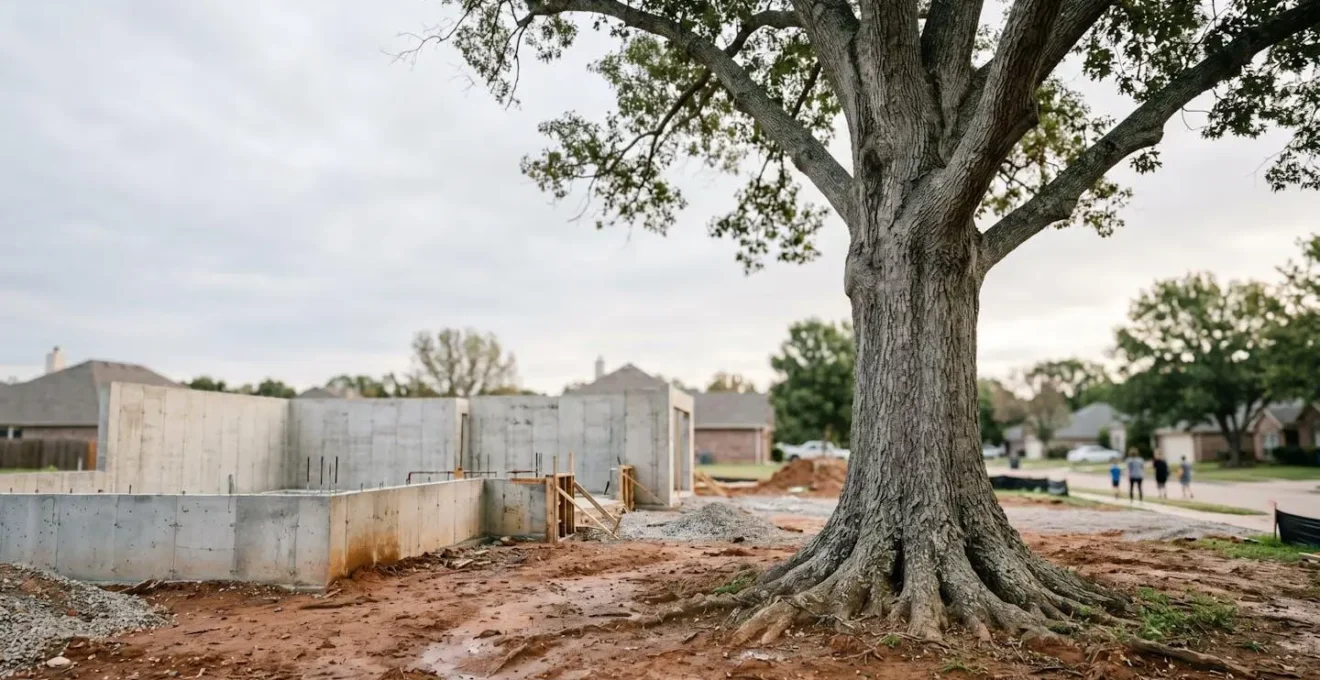
Managing this risk involves more than simply felling the tree, which can cause its own problems (like heave). Professional tree management, such as crown reduction to limit water uptake or the installation of a root barrier, is often a more effective solution. It is also important to identify who owns the problematic tree. Surprisingly, data from the UK insurance industry suggests that around 85% of subsidence claims involve trees owned or managed by local authorities on public land, which can create a complex liability situation.
The table below, based on established arboricultural guidance, outlines the safe distances for common tree species found in the UK, helping you assess the specific risk on your property.
| Tree Species | Water Demand | Zone of Influence (Safe Distance from Home) | Management Recommendation |
|---|---|---|---|
| Willow | Very High | 1.5x mature height (up to 40m) | Crown reduction or root barrier essential |
| Oak | High | 1.5x mature height (up to 30m) | Professional crown management recommended |
| Poplar | Very High | 1.5x mature height (up to 35m) | Regular pruning to reduce water uptake |
| Eucalyptus | Very High | 1.5x mature height (up to 30m) | Root barrier strongly advised on clay soil |
| Ash | High | 1.0-1.5x mature height (up to 25m) | Monitor distance, crown reduction if needed |
When to Notify Your Insurer About Cracks: Immediately or After Monitoring?
This is one of the most critical and misunderstood decisions a homeowner faces. The instinctive reaction is to call the insurer immediately, but from a strategic perspective, this can be a mistake. The distinction between a « notification » and a « claim » is vital. Many policies require you to notify your insurer of any potential issue, but initiating a formal claim before you have clear evidence of active, progressive subsidence can have long-term negative consequences.
The core issue is the Claims and Underwriting Exchange (CUE) database, which is shared among UK insurers. As the British Insurance Brokers’ Association (BIBA) warns,
Even if the insurer finds no issue and pays nothing, the initial query can be logged on shared insurance databases (like the CUE in the UK), potentially increasing future premiums or making it harder to switch providers.
– British Insurance Brokers Association, BIBA Subsidence Insurance Guide
A record of a subsidence « enquiry, » even if no claim is paid, can flag your property as high-risk.
The prudent engineering approach is to monitor first. Only after you have gathered several months of data showing progressive movement should you consider a formal claim. If your monitoring shows the cracks are minor or cyclical, you may choose to repair them privately for a fraction of your insurance excess, avoiding any record on the CUE database. If you must notify your insurer to comply with your policy, do so carefully in writing, stating it is « for information purposes only, pending a period of monitoring. »
- Monitor First: Track the cracks for at least 4-8 weeks using the methods described previously before any contact.
- Get an Expert Opinion: If you are concerned, consider a preliminary report from a structural engineer (costing £500-£1,000) to get an independent assessment of severity.
- Compare Costs: Your subsidence excess is typically high, often £1,000 or more. If the engineer’s estimated repair cost is less than your excess, it is always cheaper to pay privately.
- Notify vs. Claim: If a major intervention is needed, you can then initiate a formal claim, armed with professional evidence. If not, you have avoided a damaging and unnecessary mark against your property’s insurance history.
Why Undervaluing Your Rebuild Cost Cuts Your Claim by 50%?
While subsidence risk is a major concern, it is often a fundamental error in calculating the property’s value that causes the most significant financial devastation during a claim. Many homeowners mistakenly insure their property for its market value, not its rebuild cost. Market value includes the land and location, whereas rebuild cost is simply the price of materials and labour to reconstruct the house from the ground up. In high-value areas like London, the market value can be double or triple the actual rebuild cost, leading people to think they are over-insured when they are dangerously under-insured.
Insurers apply a strict penalty for under-insurance known as the « Condition of Average » clause. This clause states that if you have under-insured your property, you are considered to be your own insurer for the shortfall. This means they will only pay out a claim in proportion to the level of your cover. For example, if your home’s true rebuild cost is £500,000 but you have only insured it for £250,000 (50% of its value), the insurer will only pay 50% of any claim, no matter how small.
Case Study: The Devastating Impact of the Condition of Average
In one documented subsidence case, a homeowner was awarded £37,000 for essential repairs. However, the property had a true rebuild cost of £400,000 but was only insured for £200,000 (under-insured by 50%). Due to the Condition of Average clause, the insurer reduced the payout by 50%, leaving the claimant with just £18,500. This shortfall meant the homeowner could not afford to complete the structurally necessary repairs, putting their largest asset at severe risk and facing financial ruin.
This penalty is not a scare tactic; it is a standard, contractual part of most buildings insurance policies. It applies to all claims, from a small water leak to a catastrophic fire or subsidence event. Under-insuring your home is a gamble that, in the event of a major structural issue like subsidence, can lead to a financial outcome almost as damaging as having no insurance at all.
Key Takeaways
- The shrink-swell cycle of clay soil is the primary driver of subsidence, a predictable process exacerbated by dry summers and large trees.
- Proactive monitoring of cracks over several months is the most crucial first step, allowing you to differentiate between minor cyclical movement and progressive, structural subsidence.
- Under-insuring your property’s rebuild cost can be financially catastrophic due to the ‘Condition of Average’ clause, which can halve your claim payout.
The EPC « C » Rating Rule That Could Make Your Rental Illegal
For landlords, another layer of risk management intertwines with property maintenance and structural integrity. In the UK, the Minimum Energy Efficiency Standards (MEES) place a direct legal responsibility on landlords. Currently, a rental property must have an Energy Performance Certificate (EPC) rating of ‘E’ or above to be legally let to new tenants or renew existing tenancies. However, proposals have been put forward by the government to raise this minimum standard to a ‘C’ rating for all new tenancies by 2025 and all existing tenancies by 2028.
While this seems purely related to energy efficiency, it has a direct correlation with structural risk, including subsidence. Properties with low EPC ratings (F or G) are often older, poorly maintained, and suffer from issues that can either cause or mimic the signs of subsidence. As Property Risk Assessment Experts have pointed out, « Poorly maintained homes (which often have low EPC ratings) are more likely to have issues that cause or mimic subsidence, such as old, leaking drains, poor guttering causing soil saturation, and damp penetration. »
A leaking drain, for example, can create a localised soft spot in clay soil, causing a section of the foundation to sink and produce cracks identical to those from drought-induced subsidence. An insurer’s surveyor will investigate these causes. If the « subsidence » is found to be the result of poor maintenance (a leaking pipe you failed to fix), your claim will likely be rejected. Therefore, investing in the upgrades needed to meet a ‘C’ rating—such as better insulation, modern windows, and efficient heating—not only secures your rental income for the future but also often involves addressing the very maintenance issues that could lead to a rejected subsidence claim. Failing to meet these upcoming EPC standards doesn’t just risk fines; it signals a poorly maintained property that is more vulnerable to uninsured structural problems.
Buildings Insurance: How to Calculate Rebuild Cost Correctly?
Given the severe penalty of the Condition of Average, correctly calculating your property’s rebuild cost is arguably the single most important action you can take to protect yourself financially. This figure has nothing to do with what you paid for the house or its current market price. It is a technical calculation of the cost to demolish the existing, damaged structure, clear the site, and rebuild it to its original specification using current material and labour costs.
This calculation is complex and must account for numerous factors often overlooked by homeowners using simple online calculators. The total cost must include not only the main structure but all permanent fixtures, such as kitchens and bathrooms, as well as outbuildings like garages and garden walls. Furthermore, you must add a significant contingency for professional fees and site costs.
The total cost of subsidence to the UK economy is staggering, with some estimates placing it at over £3 billion in the past decade. When a major event occurs, being accurately insured is the only thing standing between a managed recovery and financial disaster. Following a professional methodology for calculating this cost is not just good practice; it is an essential part of responsible property ownership.
- Ignore Market Value: The first step is to completely disregard what your house is worth on the open market. Focus only on the physical cost to build.
- Add ‘Soft Costs’: Add 15-20% on top of the basic construction cost to cover professional fees (architects, surveyors), demolition, and site clearance.
- Include All Structures: Account for any additions and extensions (like loft conversions or conservatories), even if they were done under permitted development rights. Include garages, sheds, and boundary walls.
- Use Professional Tools: For standard-build homes, the BCIS (Building Cost Information Service) calculator, provided by the Royal Institution of Chartered Surveyors (RICS), is the industry benchmark. Many insurers provide access to it.
- Invest in a Survey for Non-Standard Homes: If your home is listed, built before 1920, or uses unusual materials (e.g., timber frame, thatch roof), a generic calculator is not sufficient. You must invest in a formal rebuild cost valuation from a RICS surveyor.
- Review Annually: Building costs can inflate rapidly. You must review and update your rebuild cost figure every year when you renew your policy.
To secure your property and your peace of mind, the next logical step is to commission a professional assessment to accurately determine your rebuild cost and evaluate any potential risks. This proactive measure is the best insurance of all.
Frequently Asked Questions on Subsidence and Insurance
Can you get buildings insurance on a house with previous subsidence?
Yes, it is possible, but it will be more difficult and expensive. You will likely need to approach a specialist insurer. They will require a full structural survey, details of the underpinning or repairs carried out, and a Certificate of Structural Adequacy to prove the work was completed to a professional standard.
Does a subsidence claim affect selling a house?
Yes, it does. You are legally required to declare any past subsidence claims to potential buyers. While a property with a history of professionally repaired subsidence is structurally sound, it can still deter some buyers or lead to lower offers. Having all the paperwork, including guarantees for the repair work, is essential to reassure buyers.
Is heave covered by home insurance?
Generally, yes. Most standard buildings insurance policies that cover subsidence will also cover heave and landslip. However, as with subsidence, the policy will have a high excess (typically starting at £1,000) and will not cover issues caused by poor maintenance or faulty workmanship.