The success of a water leak claim depends less on the damage itself and more on proactively proving it was a ‘sudden’ event and that you’ve met your maintenance duties.
- Most rejections stem from two key areas: gradual seepage (e.g., failed sealant) or under-insuring your property’s rebuild cost, which triggers a penalty.
- ‘Trace and Access’ cover is vital for finding the leak source, but it’s separate from the cost of the actual repair and the resulting water damage.
Recommendation: Start a home maintenance log today to build a proactive defence against the most common ‘wear and tear’ exclusions.
The dread that follows the discovery of a water leak is twofold. First, there’s the immediate shock of the damage: a spreading stain on the ceiling, a warped wooden floor, or the sound of dripping behind a wall. The second wave of anxiety hits when you think about the insurance claim. Will it be approved? What hidden clauses will the insurer use to reject it? Many homeowners approach this process as a passive victim, simply reporting the damage and hoping for the best. This is often a costly mistake.
The standard advice to « call your insurer immediately » and « take photos » is correct but woefully incomplete. It misses the fundamental truth of claims handling: your insurer is not your partner; they are a business managing financial risk. A successful claim isn’t a plea for help; it’s the submission of a well-argued, evidence-based case that leaves no room for refusal. It requires you to think like a loss assessor, anticipating the insurer’s objections before they are even raised.
This guide moves beyond the generic advice. It’s a strategic manual for navigating the most common pitfalls of a UK water damage claim. We won’t just tell you what to do; we will explain the strategic ‘why’ behind each action. We will dissect the ‘sudden vs. gradual’ debate, demystify the claim-killing maintenance clauses, and reveal how a simple miscalculation of your home’s value can slash your payout in half. The goal is to shift you from a position of hope to one of control, armed with the knowledge to secure the full settlement you are entitled to.
To help you navigate this complex process, this article breaks down the essential strategies into clear, manageable sections. From understanding your policy’s fine print to documenting evidence like a professional, each part is designed to build your case and maximise your chances of a successful claim.
Summary: Your Strategic Guide to Winning a Water Damage Insurance Claim
- Why You Need ‘Trace and Access’ Cover to Find the Leak Source?
- How to Prevent Burst Pipes During a UK Winter Freeze?
- Sudden Burst vs Gradual Seepage: Which One Does Insurance Cover?
- The Grout and Sealant Clause That Kills Bathroom Claims
- When to Turn Off Your Stopcock: A Guide for Holiday Absences
- Why Undervaluing Your Rebuild Cost Cuts Your Claim by 50%?
- Buildings Insurance: How to Calculate Rebuild Cost Correctly?
- How to Monitor Wall Cracks Before Calling the Insurer?
Why You Need ‘Trace and Access’ Cover to Find the Leak Source?
When a leak occurs, your standard buildings insurance policy is designed to cover the ‘resultant damage’—the cost of repairing the water-damaged walls, floors, and ceilings. However, it typically excludes the cost of the actual plumbing repair itself. More importantly, it often excludes the cost of finding the source of the leak, especially if it involves breaking through plasterboard, tiles, or concrete. This is where ‘Trace and Access’ cover becomes non-negotiable.
This specific policy extension covers the costs incurred by a specialist to pinpoint the exact location of the leak. This can involve using specialist equipment like thermal imaging cameras, acoustic detectors, or moisture meters. Without this cover, you could face a bill for thousands of pounds just for the investigation, before any repair work even begins. The good news is that 97% of UK buildings insurance policies include trace and access as a standard feature, usually with a cover limit between £5,000 and £10,000. The crucial part is understanding what your specific limit is and what it includes.
Case Study: The Plymouth Shower Leak Investigation
A homeowner in Plymouth noticed their shower was leaking into the room below. To find the hidden source behind bathroom tiles and under the floor, a trace and access investigation was required. The investigation, which included thermal imaging and controlled access through the tiling, cost £2,500. Because the homeowner had trace and access cover, this investigation bill was paid by their insurer. Without it, they would have been responsible for the £2,500 investigation cost on top of the final repair and redecoration bills, clearly demonstrating the financial protection this cover provides.
Before authorising any investigative work, you must clarify the terms with your insurer. Ask if the cover includes the cost of « making good »—that is, repairing the damage caused during the search. Confirm if a separate, higher excess applies to this part of the policy and whether you are required to use the insurer’s appointed contractor. Getting these answers in writing prevents costly misunderstandings later.
How to Prevent Burst Pipes During a UK Winter Freeze?
Prevention is always the best strategy, and the most common cause of catastrophic water damage in the UK is a burst pipe during a cold snap. When water freezes inside a pipe, it expands, putting immense pressure on the pipe walls. This pressure can cause the pipe to split, and when the ice thaws, thousands of litres of water can escape into your home in a matter of hours. The financial consequences are severe; home insurers settled roughly 8,000 claims for such damage in 2024, with the average claim costing nearly £33,000.
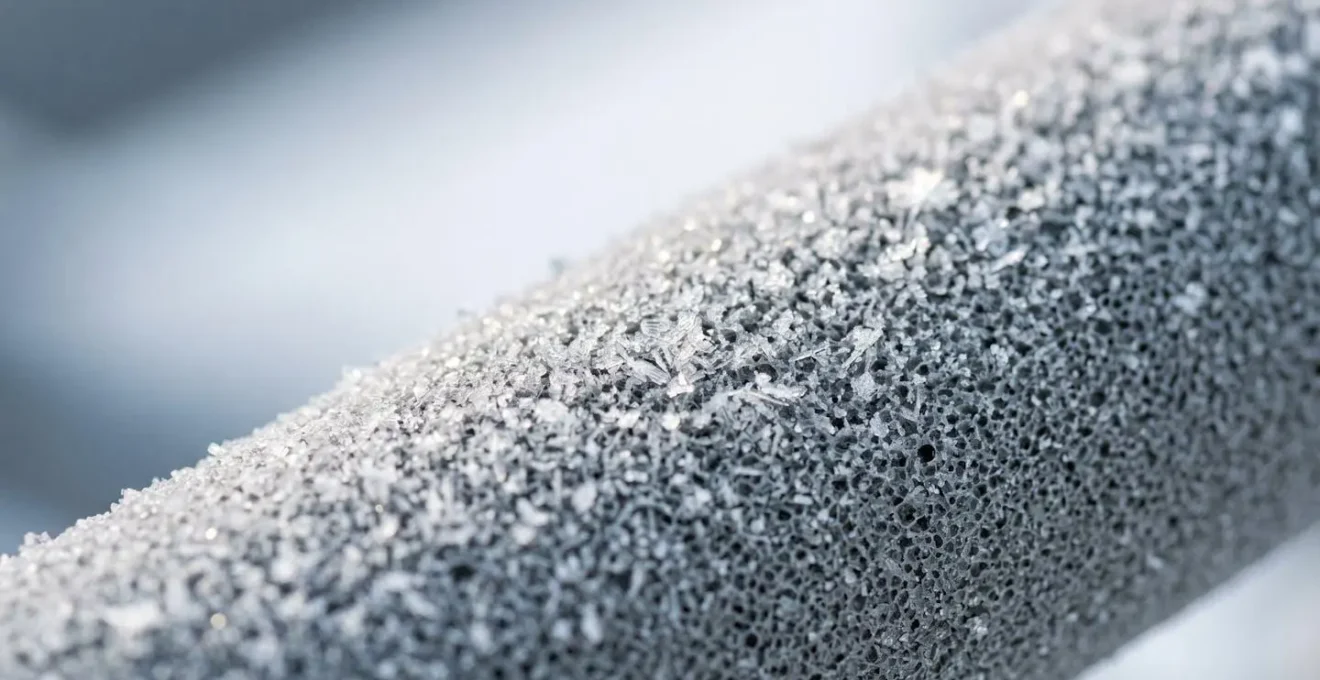
Protecting your home is about taking tiered measures based on the severity of the weather. The most vulnerable pipes are those in unheated areas like lofts, basements, garages, and those running along external walls. Your first line of defence is pipe lagging. This inexpensive foam insulation is essential for all exposed water pipes. It’s a small investment that can prevent a five-figure claim.
Beyond basic lagging, your actions should escalate with the weather forecast. During a ‘Yellow’ weather warning, ensure any outdoor tap insulators are secure and repair any dripping taps, as a constant drip can freeze and block the pipe. If an ‘Amber’ warning is issued, set your thermostat to provide continuous low-level heat (at least 12°C) and open the loft trap door to allow warmer air to circulate around the pipes and water tanks. For a ‘Red’ warning, leave the heating on at its normal temperature day and night. The cost of a higher heating bill is insignificant compared to the cost and upheaval of a major leak.
Sudden Burst vs Gradual Seepage: Which One Does Insurance Cover?
This is the single most critical distinction in water damage claims and the number one reason for rejection. Insurance policies are designed to cover ‘sudden and unforeseen’ events. A pipe that freezes and bursts overnight is a classic example of a sudden event. A slow, persistent drip from a worn-out washing machine hose or a failing seal around a shower tray that causes damage over months is a ‘gradual’ event. Insurers almost always reject claims for gradual damage, classifying it as a maintenance issue that the homeowner should have identified and rectified.
Your entire claim strategy must be built around creating a compelling ‘Narrative of Suddenness’. The evidence you collect and the way you report the incident are crucial. Even if a leak has been developing slowly, the claim should focus on the moment of discovery or the catastrophic result. For example, instead of saying, « We’ve noticed a damp patch growing for weeks, » the narrative should be, « We came home from work to find the kitchen ceiling had collapsed. » One is a maintenance problem; the other is a sudden event.
Case Study: The Gradual Leak Denial
A homeowner discovered extensive mould and rot behind their bathroom wall. The investigation traced it to a small, slow leak from a pipe that had likely been seeping for several months. The insurance company denied the claim entirely. Their reasoning was that the damage was not the result of a sudden, accidental event but rather the consequence of gradual deterioration and a lack of maintenance. The insurer argued that regular checks could have identified the problem earlier, placing the responsibility squarely on the homeowner.
Photography is your most powerful tool here. Focus on capturing evidence that supports a sudden event. Photograph water marks with sharp, defined edges which suggest a large, recent release of water. Document the collapsed ceiling or the flooded floor, as this is the ‘sudden’ resultant damage your policy is designed to cover. Crucially, avoid sending photos that scream ‘gradual’—such as significant mould growth, rust stains, or peeling paint with multiple tide marks. These images hand the insurer a reason to reject your claim on a silver platter.
The Grout and Sealant Clause That Kills Bathroom Claims
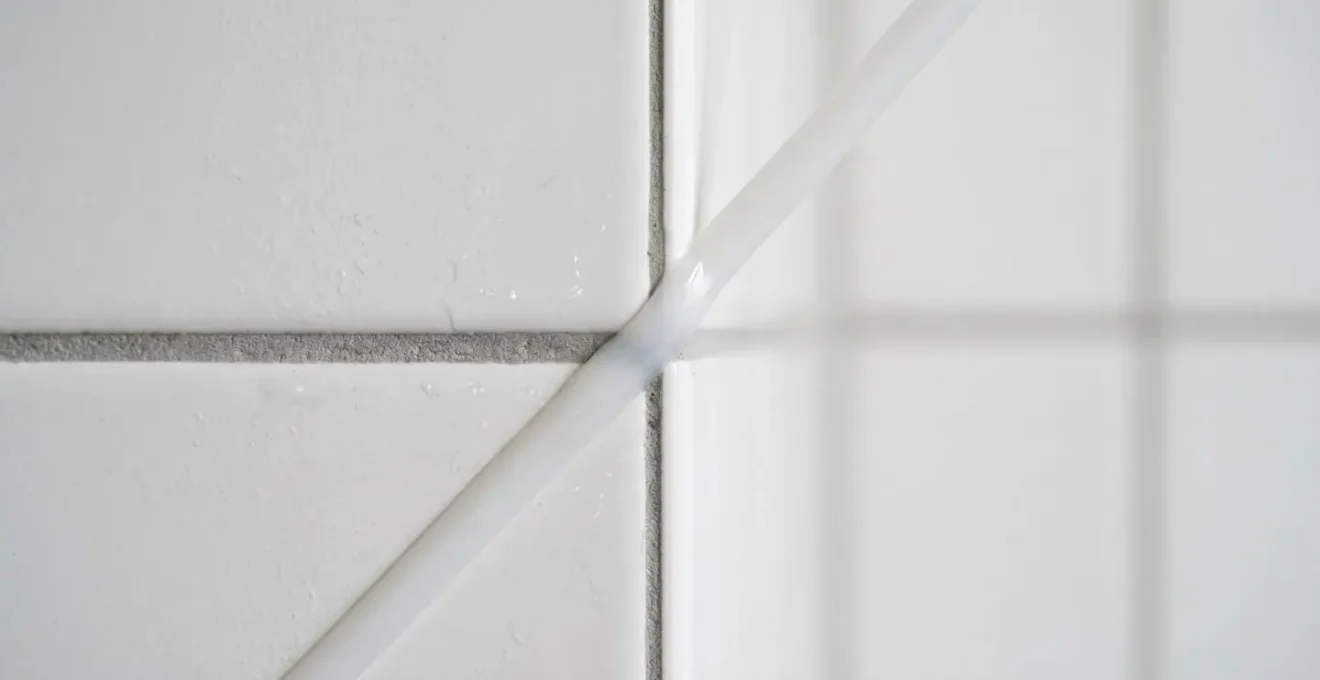
Bathroom and shower leaks are incredibly common, but they are also a minefield for insurance claims due to a specific exclusion related to maintenance. Almost every home insurance policy contains a clause that rejects claims for damage caused by ‘wear and tear’ or the failure of grout and sealant. If water seeps through cracked grout or a peeling silicone seal around a bath or shower tray, the insurer will almost certainly deny the claim, arguing that the damage resulted from poor maintenance, not a sudden, insurable event.
This is where your proactive strategy becomes essential. You must be able to prove to the insurer that you have met your duty of care by properly maintaining these areas. Simply saying you have is not enough; you need to build an evidence file *before* a leak ever occurs. The most effective way to do this is with a proactive maintenance log. This log serves as your defence against the insurer’s inevitable ‘wear and tear’ argument.
Your log doesn’t need to be complicated. It’s about creating a documented history of your maintenance efforts. This file proves you are a responsible homeowner and shifts the burden of proof back onto the insurer. If a leak still occurs despite your meticulous maintenance, it strengthens your argument that the cause was a hidden defect or building movement, rather than neglect.
Your Action Plan: The Proactive Maintenance Log
- Biannual Inspections: Every six months (e.g., April and October), take clear, dated photographs of the sealant and grout in your bathrooms, kitchen, and any other wet areas. Store these photos in a dedicated digital folder.
- Document Materials: When you re-seal an area, keep the receipt for the high-quality, mould-resistant silicone or epoxy grout you used. Add a photo of the receipt to your log. This proves you are using appropriate materials.
- Record Repairs: If you spot a small crack and repair it, take a ‘before’ and ‘after’ photo and note the date of the repair. This demonstrates ongoing diligence.
- Establish a ‘Failure State’ Baseline: Learn to identify what insurers consider ‘failed’ sealant (cracked, peeling, black with mould) versus ‘well-maintained’ (smooth, intact, clean). Your photo log should show a consistent ‘well-maintained’ state.
- Secure Your Evidence: Use a cloud storage service to back up your maintenance log. This ensures your proof is safe and has a digital timestamp that cannot be disputed.
When to Turn Off Your Stopcock: A Guide for Holiday Absences
Leaving your home unoccupied for an extended period, especially during winter, introduces a significant risk that your insurer will not tolerate without specific precautions. A standard condition in most policies relates to what you must do to protect the property from burst pipes in your absence. Failure to comply with your policy’s ‘unoccupancy clause’ can lead to an automatic claim rejection.
The critical threshold for most insurers is 30 days. According to standard policy unoccupancy clauses, if your property is left empty for more than 30 consecutive days, you are typically required to take one of two actions: either leave the heating on at a constant minimum temperature (as specified in your policy) OR turn off the water supply at the main stopcock and drain the entire system. You must check your specific policy wording, as some insurers may have a shorter threshold of 14 or 21 days.
It’s vital to understand the difference between turning off the stopcock and a full drain-down.
- Turning off the stopcock: This is the mains valve that stops new water from entering your property’s plumbing system.
- Draining the system: This is a more involved process. After turning off the stopcock, you must open all taps (starting from the top floor and working down), flush all toilets until the cisterns are empty, and potentially drain the central heating system. This removes the water already in the pipes, eliminating the risk of it freezing and bursting.
Knowing the location of your main stopcock and testing it quarterly is a fundamental part of home maintenance. It’s often found under the kitchen sink, in a utility room, or in a downstairs cloakroom. Turn it fully off and on again to ensure it hasn’t seized. If you are going away and find the stopcock is seized and won’t turn, you must contact a plumber immediately and inform your insurer in writing, with evidence, before you leave. This demonstrates you attempted to comply with their terms.
Why Undervaluing Your Rebuild Cost Cuts Your Claim by 50%?
One of the most dangerous and little-understood traps in home insurance is the ‘Condition of Average’. This clause is designed to penalise homeowners who are underinsured. If you have insured your home for less than its true rebuild cost, the insurer is entitled to proportionally reduce the payout for *any* claim, not just a total loss. This is a catastrophic financial penalty that catches millions of homeowners by surprise. In fact, research suggests that a staggering 76% of UK households may be underinsured.
The formula is brutally simple: (Sum Insured ÷ Correct Rebuild Cost) x Loss Amount = Your Payout. Let’s take a practical example. Your home’s correct rebuild cost is £400,000, but you only insured it for £300,000. You are therefore 25% underinsured. Now, you suffer a major bathroom leak that causes £20,000 worth of damage. You might expect a payout of £20,000 (minus your excess). However, the insurer will apply the Condition of Average. They will reduce your £20,000 claim by 25%, meaning you will only receive £15,000. You are left to find the remaining £5,000 yourself.
This penalty applies to every single claim, no matter how small. A £2,000 claim for a damaged carpet would be reduced in the same way. The mistake many people make is confusing rebuild cost with market value. Market value is what your house is worth to a buyer, including the land. Rebuild cost (or ‘sum insured’) is purely the cost of materials and labour to reconstruct the building from the ground up if it were destroyed. This figure must also include costs for demolition, debris removal, architects’ fees, and VAT, which can add 15-25% to the basic construction cost.
Key Takeaways
- Frame every claim around a ‘sudden and unforeseen’ event, not gradual deterioration. The narrative is everything.
- Your biggest hidden financial risk is the ‘Condition of Average’ penalty from underinsuring your home’s true rebuild cost.
- Proactive documentation, especially a biannual photo log of bathroom sealant, is your strongest weapon against ‘wear and tear’ claim rejections.
Buildings Insurance: How to Calculate Rebuild Cost Correctly?
Avoiding the devastating Condition of Average penalty hinges on one thing: accurately calculating your property’s rebuild cost. This is not a figure you can guess. Using the market value is a common error that almost guarantees you will be either over or underinsured. The correct calculation requires a methodical approach based on the specific characteristics of your property.
For many standard properties, free online tools can provide a good starting point. The Association of British Insurers (ABI) provides a calculator in partnership with the Building Cost Information Service (BCIS) of the Royal Institution of Chartered Surveyors (RICS). However, these calculators come with a significant health warning. They are designed for ‘standard’ homes and may not be accurate for properties with unique features. You should use a free calculator only if your property meets all the following criteria:
- It is of standard construction (brick walls, tile roof).
- It was built after 1945.
- It is not a listed building and has no special architectural features.
- It has not been significantly extended or renovated.
If your home is a period property, has non-standard construction (e.g., a timber frame, thatched roof), is a listed building, or has undergone significant renovations, you must not rely on an online calculator. In these cases, the only way to get an accurate figure and protect yourself is to commission a formal rebuild cost assessment from a chartered surveyor (RICS). The cost of a survey is a small price to pay for the peace of mind of knowing you are fully insured. When calculating, ensure you add 15-25% to the base cost to cover often-forgotten expenses like demolition, site clearance, professional fees (architects, surveyors), and VAT.
How to Monitor Wall Cracks Before Calling the Insurer?
While often associated with subsidence, new or growing cracks in your walls can also be a symptom of a long-term, hidden water leak. An underground drain that has collapsed or a mains water pipe that is slowly leaking can wash away the soil supporting your home’s foundations, causing them to shift and the walls to crack. Escape of water damage is one of the most common claims, with insurers paying out £1.8 million for it every day in the UK, and linking cracks to this cause can be a valid claims route.
However, you should not call your insurer at the first sight of a hairline crack. Many small cracks are simply the result of benign settlement in a new building or seasonal thermal expansion and contraction. Calling your insurer prematurely can log a ‘notification’ on your record, which could affect future premiums, even if no claim is made. Your strategy should be to monitor, measure, and document the crack over a period of at least three months to determine if it is ‘active’ and therefore a sign of a progressive problem.
The simplest way to do this is with a DIY ‘tell-tale’ test. Apply a thin, straight line of plaster or even a firm pencil line across the crack, noting the date. If the line breaks or separates over the following weeks, the crack is actively growing. For a more robust evidence package, you should:
- Start a Measurement Log: Once a month, measure the width of the crack at its widest point.
- Use a Scale Reference: Take a clear photograph of the crack with a coin or ruler placed next to it for scale.
- Distinguish Crack Types: Note the crack’s characteristics. Stable hairline cracks (less than 1mm wide) are usually cosmetic. Diagonal cracks that are wider at the top and growing progressively larger than 3mm are a serious red flag for structural movement.
After three months, if your log shows clear evidence of the crack widening, you have a strong, data-led case to present to your insurer. You are no longer making an emotional appeal based on fear, but a factual report based on objective evidence, framing the cracks as a potential symptom of a hidden water escape.
By shifting your mindset from reactive reporting to proactive case-building, you transform your relationship with your insurer. Armed with a maintenance log, accurate rebuild costs, and a clear understanding of your policy, you are no longer just a claimant; you are a prepared homeowner ready to secure the settlement you deserve. To put these strategies into practice, the next logical step is to conduct a full audit of your current policy and property documentation.